


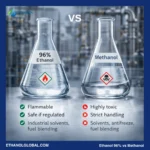



Ethanol in fuel at a glance
Ethanol is widely used in gasoline blending because it can improve octane performance and support cleaner combustion as an oxygenate. For many buyers, it’s also a practical, globally traded component with familiar documentation and established logistics options. However, ethanol’s water sensitivity and its impact on volatility mean procurement teams and blending teams should align early on specification, handling, and compliance.
This guide explains why ethanol is used in fuel, what benefits importers care about, where the risks are, and how to buy ethanol correctly for fuel-related applications.
Why ethanol is used in fuel
Ethanol is used in gasoline for a combination of technical performance, regulatory alignment, and blending practicality.
Octane improvement
Octane rating measures a fuel’s resistance to engine knock. Ethanol has strong blending characteristics that can help increase the final gasoline octane, allowing blenders to meet required grades and stabilize quality when base gasoline varies.
Oxygen content and combustion characteristics
Ethanol is an oxygenate, meaning it contains oxygen within its chemical structure. In many fuel systems, oxygenates can support more complete combustion. In markets where oxygen content matters—either for emissions programs or fuel specifications—ethanol can help meet those requirements (subject to local regulations and allowed limits).
Regulatory fuel program requirements
Some countries and regions have fuel policies that encourage or require specific blending practices. Where such programs exist, ethanol can be used to comply with mandated oxygen content or renewable component targets. The important point for buyers is that “fuel ethanol” is often a compliance product as much as it is a performance product, so documentation and traceability can be critical.
Benefits buyers care about
From an importer or fuel blender perspective, ethanol is attractive for several reasons.
Improved octane performance
For many operations, ethanol provides a commercially workable way to reach target octane without relying only on high-aromatic components. This can support consistent fuel quality and reduce blending headaches—especially when base gasoline quality shifts by season or supplier.
Blending flexibility in procurement
Ethanol can provide flexibility in supply planning because it is commonly shipped in bulk and packaged formats. Buyers can structure procurement as:
– bulk shipments for continuous blending programs, or
– packaged shipments where storage capacity or distribution requires smaller lots.
Established trade and documentation standards
In international trade, what slows down shipments is often not the product itself, but missing documents or unclear specifications. Ethanol is widely traded, and buyers typically know what they need: COA, SDS, packing details, and export documentation. This makes it easier to integrate ethanol into procurement processes compared with niche components.
Constraints and operational risks
Ethanol works well in fuel systems when handled correctly, but the risks are real. Most issues occur in storage, transfer, or logistics, not in the ethanol itself.
Water pickup and phase separation
Ethanol is hygroscopic, which means it can absorb moisture from the environment. If water enters the system (through condensation, leaks, wet tanks, or poor transfer discipline), ethanol-containing blends can become unstable and may separate into different phases. Phase separation creates operational problems, specification failure, and potentially expensive rework.
Practical implication: Water control must be part of your buying plan—packaging choice, tank condition, transfer method, and storage environment all matter.
Volatility and RVP impacts
Ethanol can influence volatility characteristics such as Reid Vapor Pressure (RVP). Many markets have seasonal volatility requirements, so the same blend strategy may not be acceptable year-round. This is why ethanol procurement should align with blending plans and seasonal specs, not just price.
Infrastructure compatibility
Not all equipment is equally suited for ethanol service. Some seals, hoses, gaskets, and older storage or transfer systems may have compatibility issues. Buyers should ensure their fuel supply chain—especially midstream handling—is configured for ethanol-containing fuel operations.
What buyers should verify before purchasing
The fastest way to reduce risk is to confirm the essentials before the first shipment. This is especially important for cross-border delivery, where delays can create extra cost and storage risk.
Correct grade and specification for intended use
Ethanol used in fuel applications should match the correct grade for your market and use case. Your RFQ should clearly state:
– intended use (fuel blending, industrial solvent, etc.)
– required parameters (purity, water limits, acidity, etc.)
– whether denaturing requirements apply in your destination
Allowed blending limits and destination rules
Ethanol content limits can be regulated. Buyers should confirm what is allowed (and what documentation is needed) in the destination market. Even if ethanol is widely used globally, the accepted blending limits and required certificates can differ.
Packaging that suits the route and storage conditions
Packaging is not just logistics—it’s a quality control decision. Common choices include:
– ISO tank for bulk shipments and improved moisture control
– IBC for flexible mid-volume procurement
– Drums for smaller quantities or controlled distribution
Your packaging choice should reflect humidity exposure, handling frequency, storage time, and whether the route includes transshipment.
Documentation set for clean customs clearance and QC
At minimum, buyers should request:
– Certificate of Analysis (COA) for each batch
– Safety Data Sheet (SDS/MSDS)
– Specification sheet
– Commercial invoice + packing list
For many importers, the difference between a smooth shipment and a delayed shipment is the supplier’s ability to deliver consistent, complete documents aligned with destination requirements.
Practical procurement tips for importers
A buyer-friendly procurement approach is to standardize your RFQ and comparison method:
– Compare offers on the same Incoterm, packaging, and destination
– Keep the specification and document list consistent across suppliers
– Ask for lead time and shipment schedule early (not after price agreement)
– If you are budgeting, separate product cost from logistics cost so you can see what is really moving
Work with a trade-ready supplier
For international buyers, the supplier’s ability to deliver consistent quality and clean documentation is as important as price. A low price can become expensive if the shipment is delayed, documents are incomplete, or packaging creates moisture exposure.
Ethanol Global supports buyers with:
– export-ready documentation workflows
– clear specifications and batch traceability
– packaging options aligned with handling and shipping realities
– practical quotation terms to reduce back-and-forth
If you share your destination, volume, and preferred packaging (ISO tank, IBC, or drums), we can prepare a clear quotation and recommended shipping approach.