


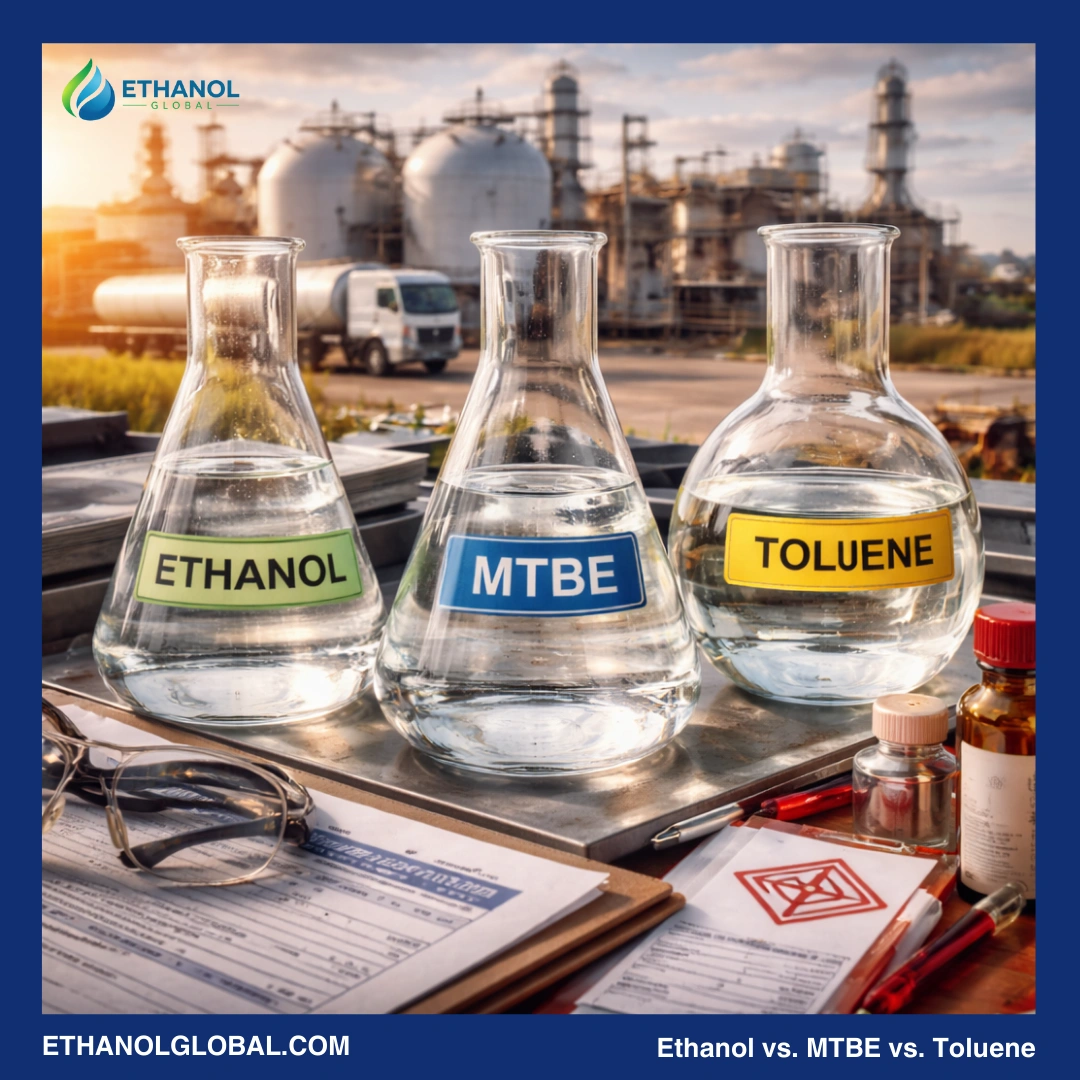
Why buyers compare Ethanol vs. MTBE vs. Toluene
Buyers compare ethanol, MTBE, and toluene because all three can raise octane, but they do it with very different “trade-offs.” In real procurement, the question is rarely “Which one has higher octane?” The real question is: Which option helps you meet your fuel specification reliably, within your local regulations, with the lowest operational risk and the cleanest logistics?
A good octane booster choice depends on four practical filters:
– Regulations: what your market allows (oxygenates, aromatics, labeling, denaturing rules)
– Blend targets: octane plus volatility limits, distillation curve, oxygen content requirements
– Infrastructure: tank condition, water exposure risk, materials compatibility, terminal discipline
– Supply chain reality: availability, lead time, documentation, and consistent quality
A quick comparison: what changes for procurement teams
When procurement teams evaluate ethanol vs MTBE vs toluene, they typically compare:
– Compliance risk: is it permitted and accepted in the destination market?
– Handling risk: water sensitivity, contamination risk, and safety requirements
– Blend predictability: how stable the blend is under typical storage and distribution conditions
– Total delivered cost: not only product price, but also logistics, storage losses, and potential rework
Ethanol as an octane booster
Ethanol is widely used in many fuel systems because it combines octane improvement with oxygen content, which can be valuable in oxygenated gasoline programs.
Strengths
–Established supply chains in many markets with mature documentation practices
– Oxygenate function can help meet certain fuel program requirements
– Effective octane improvement within allowed blending limits
– Often supports flexible blending when base gasoline varies
Watch-outs
–Water sensitivity and phase separation are the biggest operational risks
– Volatility/RVP impacts may require seasonal planning and careful blend design
– Infrastructure compatibility matters (seals, hoses, tanks, transfer systems)
– Requires strong logistics discipline: dry tanks, sealed transfers, controlled storage
Best fit when: your market allows ethanol and you can maintain tight moisture control, and your blend plan accounts for volatility constraints.
MTBE as an octane booster
MTBE has been used historically as an oxygenate and octane component. In some supply chains, it can be operationally simpler than ethanol because it is generally less sensitive to water.
Strengths
–Lower water sensitivity compared with ethanol in typical systems
– Predictable blending behavior in many gasoline operations
– Can function as an oxygenate where regulations allow
– Useful in systems where moisture exposure is difficult to control
Watch-outs
–Regulatory restrictions exist in some countries/regions due to groundwater/environmental concerns
– Acceptance varies widely by destination market and local policy
– Buyers must confirm local permitting and compliance before contracting
– Availability may be inconsistent depending on region and trade flows
Best fit when: it is clearly permitted and accepted in your destination market, and you need an oxygenate with reduced moisture sensitivity relative to ethanol.
Toluene as an octane booster
Toluene is a high-octane aromatic component and can contribute strong octane improvement in certain blending strategies, but it comes with specification and HSE considerations.
Strengths
–High octane blending component with strong knock resistance contribution
– Can be effective for targeted blending where allowed
– May be used in specific formulations depending on local fuel specs
Watch-outs
–Aromatic content limits in many fuel specifications can restrict how much you can use
– Health, safety, and environmental controls are more demanding (exposure and handling)
– Not an oxygenate, so it won’t satisfy oxygen mandates
– Storage and occupational exposure controls are critical in terminals and blending facilities
Best fit when: aromatic limits are not tight, oxygen is not mandated, and you have strong HSE controls and compliance clarity.
Procurement checklist for buyers
Before placing an order, confirm:
– Local fuel regulations: allowed oxygenates, aromatics, and any labeling/permit requirements
– Target fuel specs: octane, volatility/RVP, distillation curve, oxygen requirements
– Infrastructure readiness: tank dryness, water control, materials compatibility, transfer discipline
– Documentation: batch COA, SDS, specification sheet, and consistent product identification
– Delivery basis: same Incoterm and destination for fair quote comparison
– Risk plan: what you will do if lead time changes, freight tightens, or regulations require extra documents
Common mistakes buyers make
-Comparing prices without matching Incoterms (EXW vs CFR)
– Ignoring packaging and handling realities (especially moisture control)
– Assuming a booster is “allowed” without verifying local policy and acceptance
– Focusing only on octane and forgetting volatility and specification limits
– Not requiring batch-specific COA and consistent documentation
Ethanol Global note
If ethanol is the chosen route, Ethanol Global can support supply planning, export documentation, and packaging options designed for real trade conditions. Share your destination, preferred packaging (tanker/IBC/drums), and intended use, and we can provide a clear quotation basis with the documentation set your procurement team needs.