



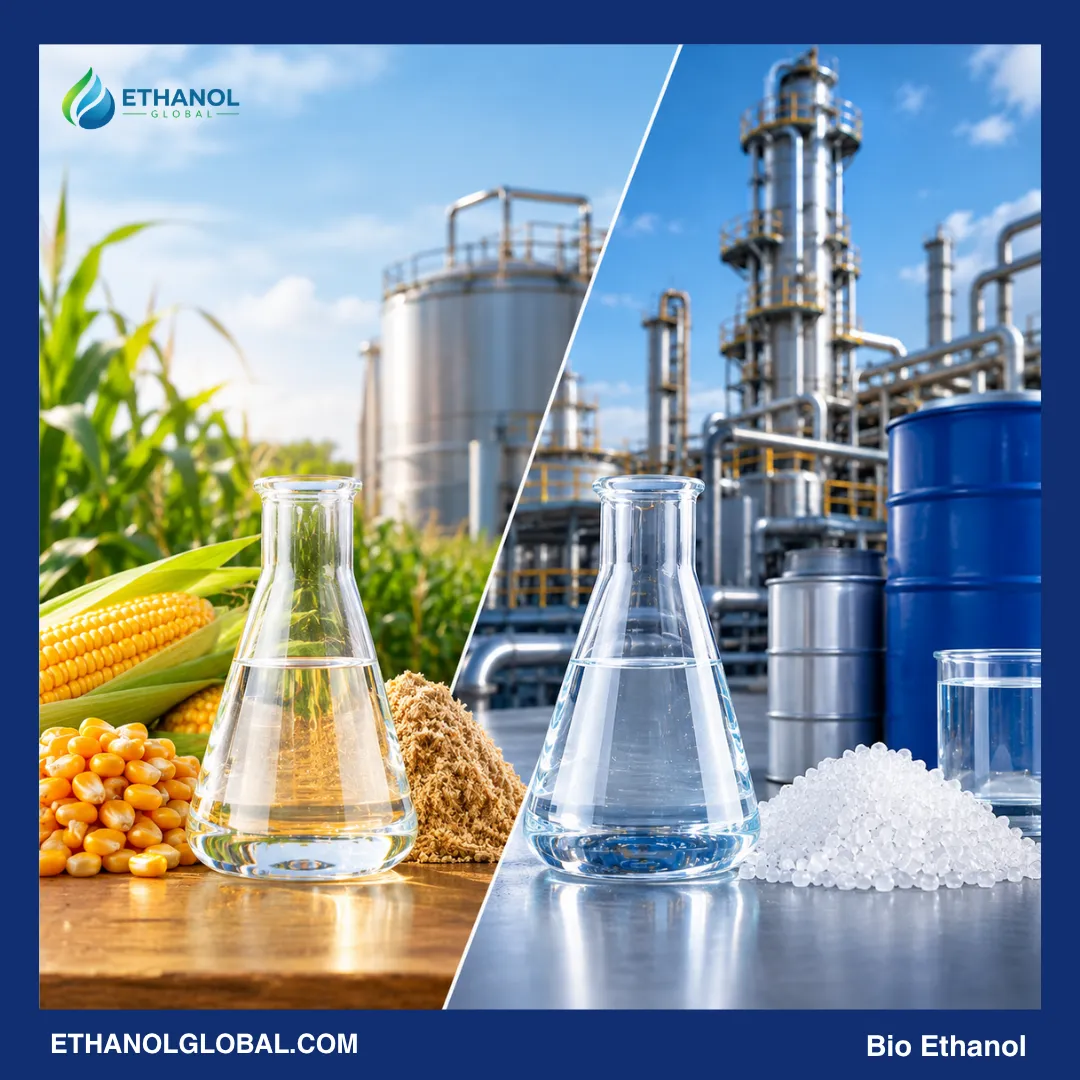
Ethanol is an important industrial chemical used in pharmaceuticals, cosmetics, food processing, fuel production, and chemical manufacturing. However, ethanol can come from different sources. Bio ethanol is produced from renewable biological feedstocks, while synthetic ethanol is manufactured through chemical processes using petrochemical raw materials.
Understanding the differences between these two types of ethanol helps industrial buyers select the appropriate product based on purity, application, supply requirements, and production method.
What Is Bio Ethanol?
Bio ethanol is ethanol produced through the fermentation of biomass containing sugars, starches, or other fermentable carbohydrates. Common feedstocks include sugarcane, corn, wheat, molasses, and other agricultural materials.
During production, microorganisms convert sugars into ethanol and carbon dioxide. The fermented mixture then undergoes distillation and, when necessary, dehydration to achieve the required ethanol concentration.
The main stages of bio ethanol production include:
- Feedstock preparation
- Conversion of starch into fermentable sugars when required
- Fermentation
- Distillation
- Dehydration or purification
- Storage and packaging
Because its raw materials can be replenished through agriculture, bio ethanol is generally considered a renewable source of ethanol.
What Is Synthetic Ethanol?
Synthetic ethanol is produced through chemical synthesis rather than biological fermentation. One established industrial route involves the hydration of ethylene in the presence of a catalyst.
In this process, ethylene reacts with water to form ethanol. Industrial producers can control reaction conditions to achieve consistent production and high purity.
Synthetic ethanol production typically involves:
- Ethylene preparation
- Catalytic hydration
- Separation of ethanol from the reaction mixture
- Purification
- Storage and distribution
This production route can provide a consistent supply of ethanol for industries that require controlled chemical specifications.
Bio Ethanol vs. Synthetic Ethanol: Key Differences
The primary difference between bio ethanol and synthetic ethanol is their production route and raw material source.
| Factor | Bio Ethanol | Synthetic Ethanol |
|---|---|---|
| Main feedstock | Agricultural biomass | Ethylene and petrochemical feedstocks |
| Production method | Fermentation and distillation | Chemical synthesis |
| Carbon source | Renewable biological materials | Mainly fossil-derived raw materials |
| Production characteristics | Dependent on agricultural feedstock | Dependent on petrochemical supply |
| Typical applications | Fuel, pharmaceuticals, food, cosmetics | Chemicals, solvents, pharmaceuticals, industrial applications |
| Sustainability considerations | Can support renewable production | Depends heavily on feedstock and energy source |
The actual suitability of either type depends on the required grade, specifications, regulatory requirements, and intended application.
How Is Bio Ethanol Produced?
The production of bio ethanol begins with a carbohydrate-rich feedstock. If the raw material contains starch, enzymes can convert the starch into fermentable sugars. Sugar-based materials can generally enter the fermentation stage more directly. For a detailed overview of the ethanol production process, including fermentation, distillation, rectification, and dehydration, see our complete production guide.
During fermentation, yeast converts sugars into ethanol and carbon dioxide. The resulting mixture contains ethanol, water, and other compounds.
Distillation then increases the ethanol concentration. For applications requiring very low water content, additional dehydration can produce a higher-purity ethanol grade.
Feedstock selection, fermentation efficiency, distillation conditions, and purification technology can all affect the final product quality.
How Is Synthetic Ethanol Produced?
Synthetic ethanol is commonly manufactured through the catalytic hydration of ethylene. The reaction combines ethylene with water under controlled industrial conditions to produce ethanol.
After the reaction, separation and purification steps remove water and other components. The final product can then be adjusted to meet the specifications required by the target industry.
One advantage of chemical synthesis is the ability to integrate ethanol production with established petrochemical infrastructure. This can support continuous industrial production and predictable raw-material supply when ethylene is readily available.
Industrial Uses of Bio Ethanol
Bio ethanol has applications across several industries. Its use depends on purity, concentration, denaturants, and regulatory requirements.
1. Pharmaceutical Industry
Ethanol is widely used as a solvent and processing ingredient in pharmaceutical manufacturing. It can be used in formulations, extraction processes, cleaning applications, and the production of certain pharmaceutical products.
2. Cosmetics and Personal Care
Ethanol is used in perfumes, fragrances, sprays, and personal-care formulations because of its solvent properties and volatility.
3. Food Processing
Food-grade ethanol can be used in flavor extraction, food processing, and certain manufacturing processes. The required grade must comply with applicable food-safety standards.
4. Fuel and Energy
Bio ethanol is also widely associated with renewable fuel applications. It can be blended with gasoline or used in fuel systems designed for ethanol-containing fuels. Additionally, the U.S. Department of Energy explains that ethanol commonly serves as a gasoline blending component, with fuel blends such as E10 and E85 supporting different applications.
5. Chemical Manufacturing
Ethanol serves as a solvent and chemical feedstock in the production of various industrial products.
Industrial Uses of Synthetic Ethanol
Synthetic ethanol can also serve many industrial applications where consistent chemical specifications are important.
It is used as a solvent in chemical manufacturing, pharmaceutical processing, coatings, cleaning formulations, and other industrial processes. Synthetic ethanol can also serve as a raw material for producing chemicals such as ethyl acetate and other ethanol-derived compounds.
The choice between synthetic and bio-based ethanol should therefore focus on the required product specification rather than production method alone.
Purity and Quality Considerations
For industrial buyers, ethanol purity is often more important than whether the product comes from biological or synthetic production.
Important quality parameters may include:
- Ethanol concentration
- Water content
- Methanol content
- Acidity
- Aldehyde content
- Residual impurities
- Appearance
- Denaturant content, where applicable
The appropriate specification depends on the application. Pharmaceutical, food, cosmetic, fuel, and industrial applications may require different quality standards.
Sustainability Considerations
A major distinction between bio ethanol and synthetic ethanol is the source of their carbon feedstock.
Bio ethanol can use renewable agricultural materials, which may reduce dependence on fossil-based raw materials. However, its overall environmental performance depends on factors such as farming practices, land use, water consumption, fertilizer use, transportation, and energy requirements during processing.
Synthetic ethanol relies primarily on chemical feedstocks such as ethylene. Its environmental impact therefore depends significantly on the origin of the raw materials and the energy used during production.
For this reason, comparing the sustainability of ethanol requires consideration of the complete production chain rather than the production method alone.
Which Ethanol Is Suitable for Industrial Applications?
There is no single ethanol source that is suitable for every application. Buyers should evaluate the technical requirements of their process before selecting a supplier or production route.
For example, pharmaceutical and cosmetic manufacturers may prioritize purity and controlled impurities. Fuel producers may focus on specifications related to blending and combustion. Chemical manufacturers may prioritize consistent availability, concentration, and cost.
Therefore, purchasing decisions should consider:
- Required ethanol grade
- Purity and concentration
- Regulatory requirements
- Feedstock origin
- Supply availability
- Packaging and transportation
- Cost
- Intended industrial application
Conclusion
Bio ethanol and synthetic ethanol have the same basic chemical identity, but their production methods and raw-material sources are different. Bio ethanol is produced through biological fermentation of renewable feedstocks, while synthetic ethanol is manufactured through chemical synthesis, commonly using ethylene.
Both types can serve important industrial applications. The appropriate choice depends on factors such as purity, application requirements, regulatory specifications, supply availability, cost, and sustainability objectives.
For industrial buyers, evaluating the complete product specification and supply chain is essential before selecting an ethanol grade for a specific process.
Looking for reliable Ethanol 96% for industrial applications? Ethanol Global is a trusted producer and exporter, supplying high-quality ethanol with consistent specifications for pharmaceutical, chemical, cosmetic, and other industrial needs.