

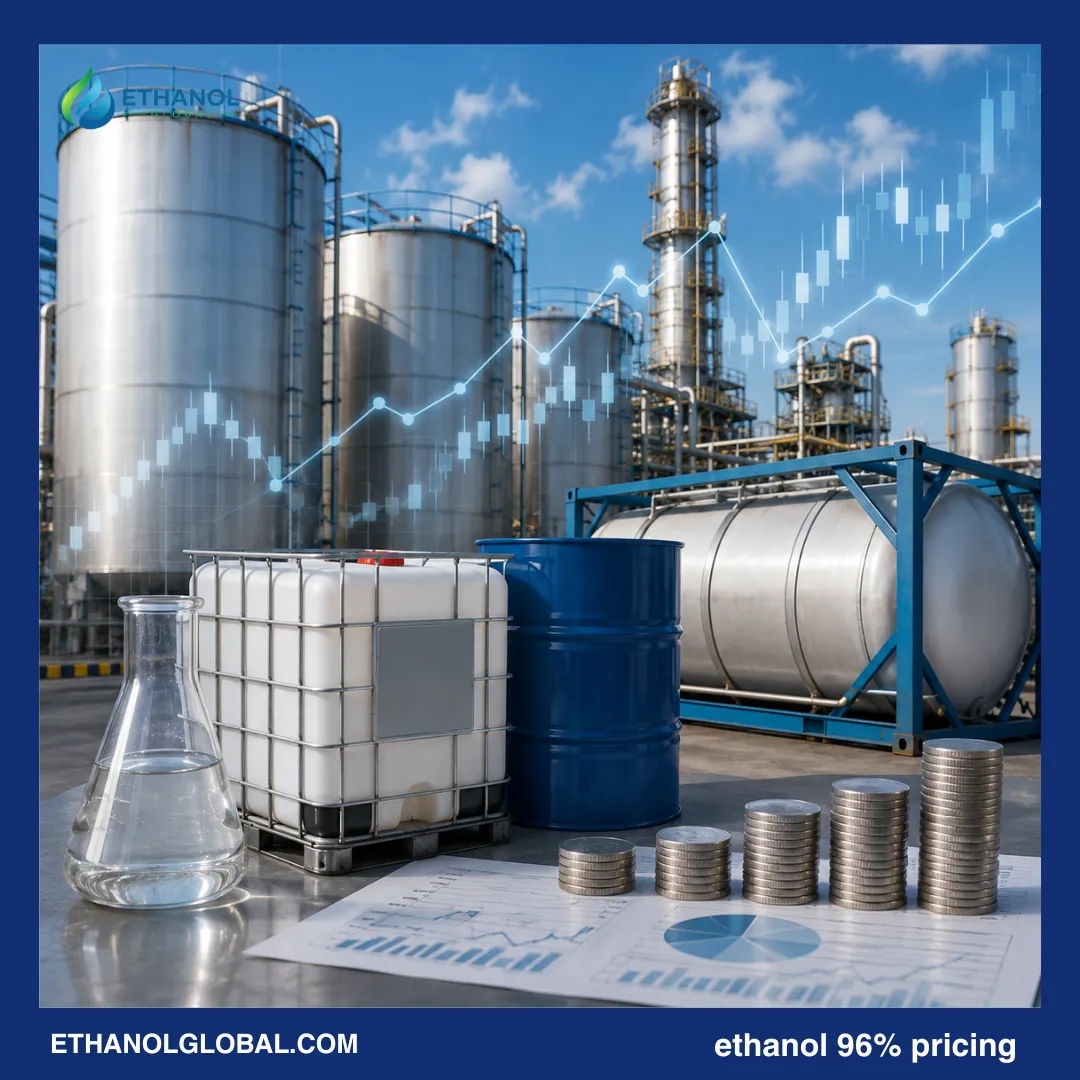
For industrial buyers, understanding ethanol 96% pricing is essential for making cost-effective purchasing decisions and securing long-term supply contracts. The market price of 96% ethanol is influenced by numerous variables beyond simple supply and demand. Feedstock availability, energy costs, production efficiency, transportation expenses, and international trade conditions all contribute to the final bulk price. By understanding these cost drivers, importers and procurement managers can better negotiate contracts and optimize their purchasing strategies. Recent market reports also show that ethanol prices continue to respond to changing energy markets and international trade dynamics.
1. Feedstock Costs
The largest component of ethanol production cost is the raw material used during manufacturing. Depending on the production process, ethanol may be produced from:
- Corn
- Sugarcane
- Wheat
- Molasses
- Synthetic ethylene
Agricultural commodity prices fluctuate due to weather conditions, harvest yields, fertilizer costs, export restrictions, and global demand. Whenever feedstock prices increase, manufacturers typically pass these additional costs on to industrial buyers.
2. Energy Consumption During Production
Producing high-purity ethanol 96% requires multiple energy-intensive stages, including:
- Fermentation
- Distillation
- Dehydration
- Quality testing
Natural gas, electricity, steam, and cooling water account for a significant portion of operating expenses. Manufacturers with modern, energy-efficient facilities often achieve lower production costs, enabling them to offer more competitive pricing.
3. Product Grade and Quality Specifications
Not all ethanol 96% products are identical. Pricing varies depending on quality requirements, including:
- Industrial Grade
- Food Grade
- Pharmaceutical Grade
- Laboratory Grade
Additional purification processes, certification, and quality assurance increase production costs, making higher-grade ethanol more expensive than standard industrial grades.
4. Packaging Method
Packaging has a direct impact on bulk pricing. Common export packaging includes:
- Steel drums
- HDPE drums
- IBC totes
- ISO tank containers
- Flexitanks
For high-volume industrial buyers, ISO tanks generally provide the lowest cost per liter because they reduce packaging expenses and improve transportation efficiency.
5. Transportation and Freight Costs
Logistics play a major role in determining the final delivered price. Freight costs depend on:
- Shipping distance
- Fuel prices
- Port charges
- Container availability
- Insurance
- Customs procedures
International buyers should always compare FOB, CFR, and CIF quotations to determine the actual total procurement cost.
6. Supply and Demand Conditions
Like other bulk chemicals, ethanol pricing changes according to market demand.
Demand may increase because of:
Use up and down arrow keys to resize the meta box pane.
- Pharmaceutical manufacturing
- Chemical production
- Industrial cleaning applications
- Solvent manufacturing
- Seasonal purchasing patterns
Temporary shortages or increased industrial consumption often result in higher market prices.
7. Exchange Rates and International Trade
Since ethanol is widely traded internationally, currency fluctuations directly affect export pricing. Exchange rate movements, import duties, tariffs, and trade policies all influence purchasing costs for international buyers.
Businesses importing ethanol should monitor both commodity markets and foreign exchange trends before placing large purchase orders.
8. Environmental and Regulatory Compliance
Environmental regulations continue to influence manufacturing costs worldwide. Producers may invest in:
- Energy-efficient equipment
- Wastewater treatment
- Emission reduction systems
- Sustainability certifications
Although these investments increase production expenses, they also improve product quality and long-term supply reliability.
9. Bulk Purchase Volume
Order quantity significantly affects unit pricing.
Typical pricing advantages include:
- Lower price per liter
- Reduced packaging cost
- Lower transportation cost
- Better contract terms
- Stable long-term supply
Many suppliers offer volume discounts for annual purchasing agreements.
How Buyers Can Reduce Procurement Costs
Industrial buyers can improve purchasing efficiency by:
- Signing long-term supply agreements
- Ordering full container loads
- Comparing multiple shipping terms
- Monitoring feedstock market trends
- Selecting experienced export suppliers
- Planning purchases before seasonal demand peaks
These strategies help reduce procurement risk while improving budget predictability.
Conclusion
Understanding the factors behind ethanol 96% pricing enables procurement teams to make more informed purchasing decisions. Rather than focusing solely on the quoted price, buyers should evaluate feedstock costs, production efficiency, logistics, packaging, product specifications, and supplier reliability. A comprehensive procurement strategy often results in lower total acquisition costs and a more secure supply chain. Market pricing remains closely tied to feedstock, energy, and global trade conditions, making regular market monitoring an important part of bulk purchasing decisions.
Looking for a reliable Ethanol 96% supplier? We are a trusted manufacturer and exporter of high-quality Ethanol 96%, providing competitive pricing, consistent quality, and secure global delivery solutions for industrial buyers worldwide. Contact us today for bulk ethanol supply and export inquiries.