




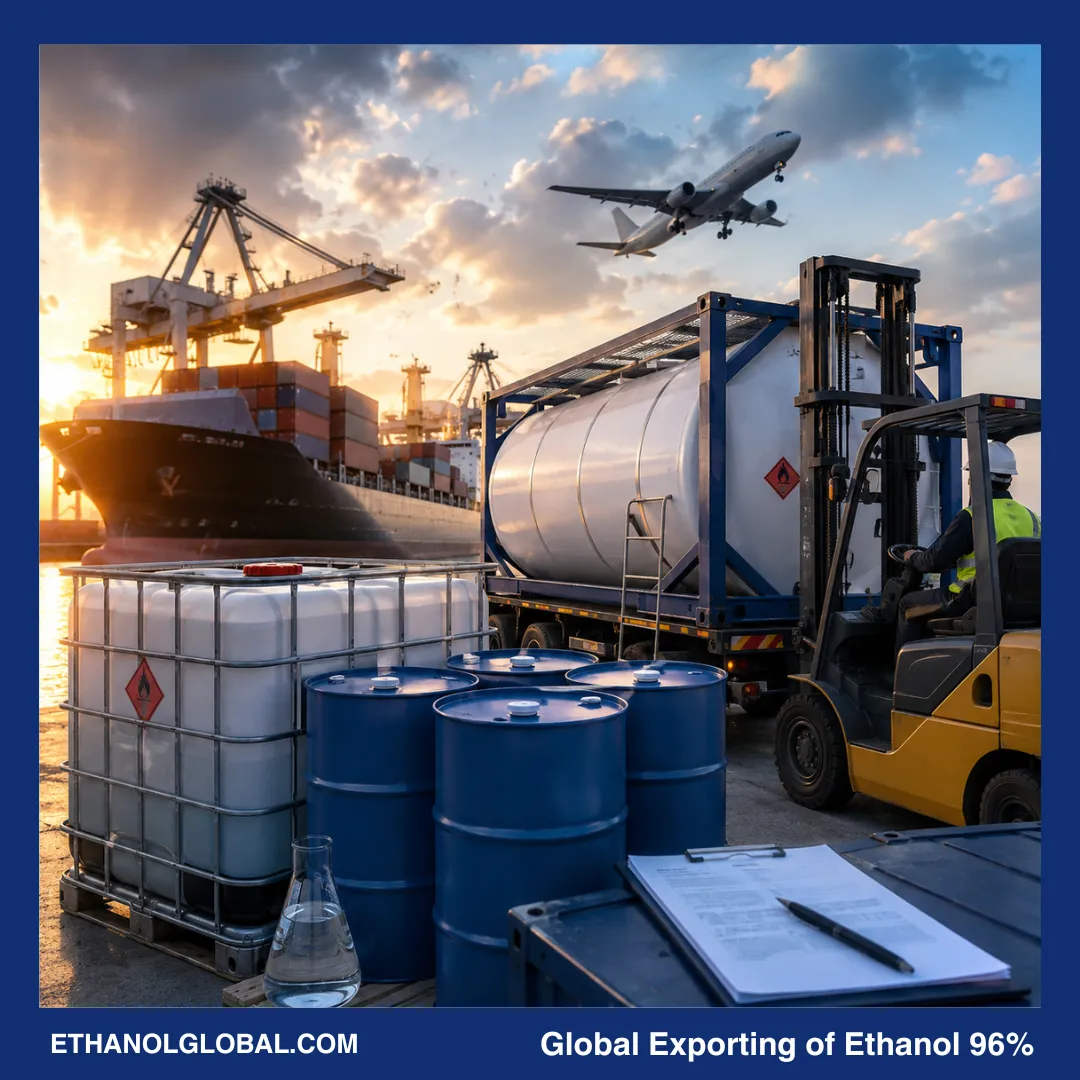
Global exporting of Ethanol 96% requires much more than finding buyers and arranging transportation. Because ethanol is classified as a flammable liquid, exporters must comply with customs regulations, dangerous goods transportation rules, documentation requirements, and international packaging standards. Companies that understand these requirements can reduce customs delays, minimize logistics risks, and improve customer satisfaction.
Whether you are shipping industrial ethanol to Europe, Asia, the Middle East, or neighboring CIS countries, understanding international trade regulations is essential for successful exports.
Why Customs Compliance Matters in Global Exporting of Ethanol 96%
International customs authorities carefully inspect chemical shipments to verify:
- Product classification
- HS Code accuracy
- Export documentation
- Packaging compliance
- Dangerous goods labeling
- Country-of-origin requirements
Even a minor documentation error can result in shipment delays, additional inspection fees, or customs rejection.
For industrial buyers, reliable suppliers are those who prepare complete export documentation before cargo leaves the port. Export-ready documentation significantly simplifies customs clearance.
Essential Customs Documents for Ethanol 96% Export
Every international shipment should include several mandatory documents.
1. Commercial Invoice
The commercial invoice includes:
- Product description
- Quantity
- Unit price
- Total shipment value
- Incoterms
- Buyer and seller information
Customs authorities use this document to calculate duties and taxes.
2. Packing List
A detailed packing list contains:
- Number of drums or IBC tanks
- Net weight
- Gross weight
- Dimensions
- Package identification marks
This document allows customs inspectors to verify cargo quickly.
3. Certificate of Analysis (COA)
Industrial buyers almost always request a COA showing:
- Ethanol purity
- Water content
- Physical properties
- Batch number
- Laboratory verification
Providing a batch-specific COA improves traceability and buyer confidence.
4. Material Safety Data Sheet (MSDS)
Because Ethanol 96% is classified as a hazardous chemical, the MSDS provides:
- Hazard identification
- Fire-fighting measures
- Safe handling instructions
- Storage recommendations
- Emergency procedures
Many customs authorities and freight forwarders require an MSDS before shipment.
Correct HS Code Classification
One of the most common export mistakes is using an incorrect HS Code.
The Harmonized System (HS) Code determines:
- Import duties
- Customs procedures
- Regulatory requirements
- Trade statistics
Different countries may use additional national tariff codes beyond the six-digit international HS code, so exporters should always confirm the correct classification with the destination country’s customs authority.
Packaging Standards for International Ethanol Shipments
Choosing appropriate packaging is critical for safety, regulatory compliance, and transportation efficiency.
The most common packaging options include:
| Packaging Type | Best For | Advantages |
|---|---|---|
| Steel Drums | Small to medium shipments | Easy handling and global acceptance |
| Plastic Drums | Regional deliveries | Lower cost |
| 1000 L IBC Tanks | Bulk industrial buyers | Better space utilization |
| ISO Tank Containers | Large-volume exports | Lowest transportation cost per liter |
Selecting the right packaging depends on shipment volume, destination, and transportation mode. Industrial exporters commonly offer drums, IBC tanks, and bulk solutions while ensuring compatibility with international transport regulations.
Dangerous Goods Labeling Requirements
Since Ethanol 96% is a highly flammable liquid, every package must display appropriate hazard labels.
Typical labeling includes:
- UN Number
- Flammable liquid symbol
- Proper shipping name
- Handling instructions
- Manufacturer information
- Batch identification
Incorrect labeling is one of the leading causes of customs inspections and shipping delays.
Transportation Regulations
International ethanol shipments must comply with dangerous goods regulations depending on the transportation method.
Road Transport
Road shipments generally follow ADR regulations in many regions.
Sea Freight
Ocean shipments comply with the IMDG Code.
Air Freight
Air cargo follows IATA Dangerous Goods Regulations, which impose stricter quantity and packaging limits.
Professional logistics providers ensure compliance with the applicable transport regulations before shipment.
Packaging Quality Directly Affects Customs Clearance
Proper packaging is not only a safety requirement—it also reduces inspection risks.
High-quality export packaging should:
- Prevent leakage
- Resist corrosion
- Protect labels during transit
- Maintain product purity
- Withstand long-distance transportation
Damaged packaging often results in customs inspections, cargo rejection, or additional handling costs.
Country-Specific Import Requirements
Although international standards provide a common framework, every importing country may impose additional requirements such as:
- Import permits
- Product registration
- Language-specific labels
- Country-of-origin declarations
- Additional safety certifications
Exporters should verify destination-market requirements before finalizing shipment documentation.
Best Practices for Successful Global Exporting of Ethanol 96%
Leading exporters follow a standardized export process that includes:
- Verifying HS Code classification
- Preparing complete export documentation
- Providing batch-specific COA
- Including updated MSDS
- Using internationally approved packaging
- Applying compliant dangerous goods labels
- Coordinating with experienced freight forwarders
- Confirming destination-country customs requirements before shipment
These practices reduce delays, improve customs clearance efficiency, and strengthen long-term relationships with international buyers.
Common Export Mistakes to Avoid
Some of the most frequent errors include:
- Incorrect HS Code classification
- Missing MSDS documentation
- Incomplete commercial invoices
- Improper dangerous goods labeling
- Low-quality packaging
- Missing batch traceability
- Failure to verify destination-country regulations
Avoiding these mistakes helps exporters reduce logistics costs and improve delivery reliability.
Conclusion
Successful Global Exporting of Ethanol 96% depends on far more than competitive pricing. Customs compliance, accurate documentation, internationally accepted packaging, and proper hazardous goods handling are essential for smooth international trade. Exporters who invest in standardized procedures and regulatory compliance can shorten customs clearance times, reduce transportation risks, and build long-term trust with industrial buyers worldwide.
As a trusted supplier and global exporter of Ethanol 96%, we deliver consistent quality, compliant packaging, and reliable international shipping solutions tailored to industrial buyers worldwide.