


Understanding Ethanol Pricing in Different Shipping Methods
Ethanol pricing is influenced by multiple factors, including raw material costs, market demand, purity levels, and transportation methods. One of the most significant considerations for industrial buyers is whether ethanol is shipped in bulk tankers or packed in drums. The chosen shipping method can have a substantial impact on the final purchase price and overall supply chain efficiency.
Companies involved in chemicals, pharmaceuticals, food processing, and manufacturing often compare tanker and drum shipments to optimize procurement costs. Understanding how each option affects ethanol pricing helps buyers make more informed purchasing decisions.
What Is Tanker Shipment?
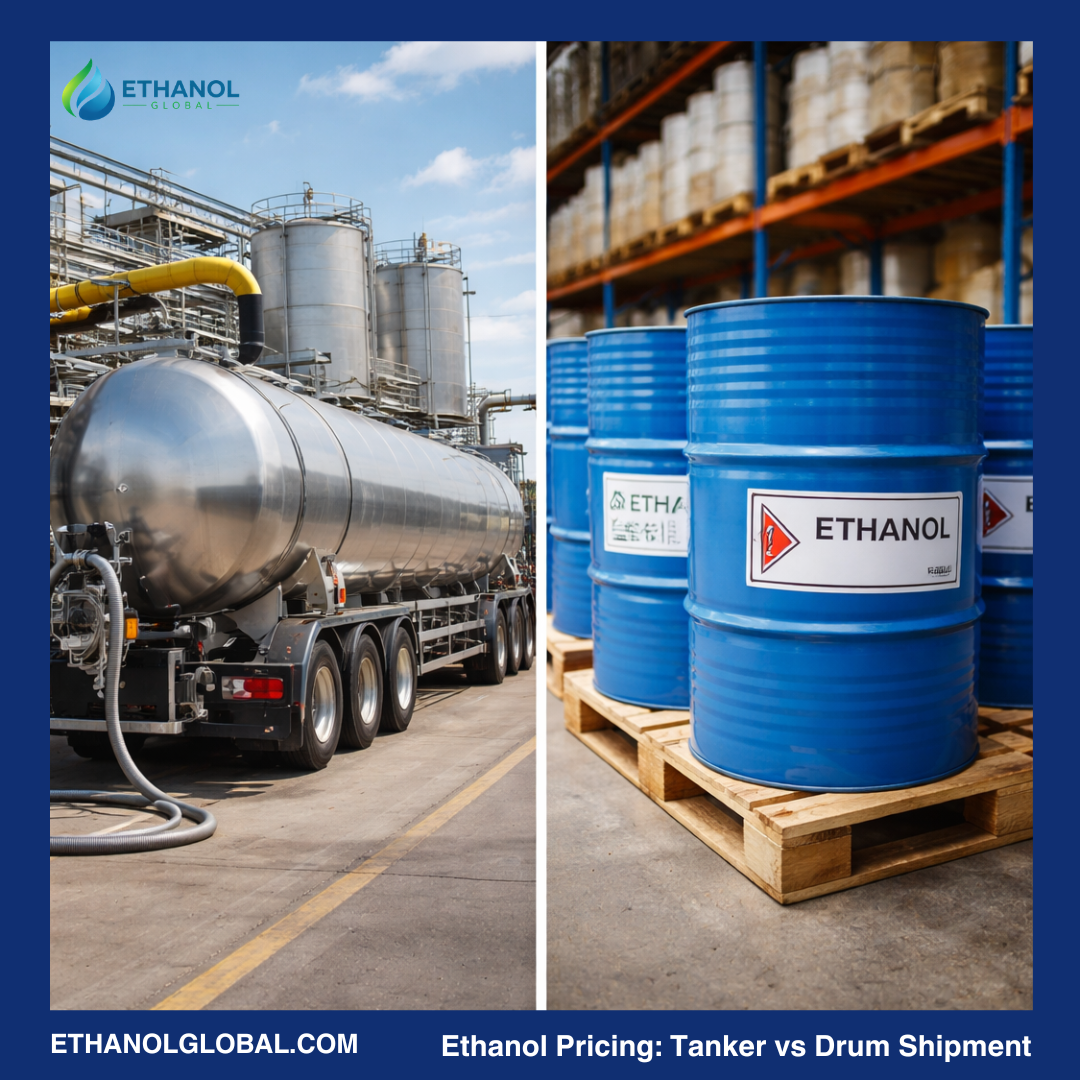
Tanker shipment refers to the transportation of ethanol in large bulk quantities using tanker trucks, ISO tanks, rail tankers, or marine tankers. This method is commonly used by large-scale industrial consumers with sufficient storage facilities.
Bulk tanker deliveries typically range from several thousand liters to tens of thousands of liters per shipment, making them highly efficient for continuous industrial operations.
Advantages of Tanker Shipments
- Lower packaging costs
- Reduced handling requirements
- Lower transportation cost per liter
- Better pricing for high-volume purchases
- Improved supply chain efficiency
Because packaging expenses are minimized, bulk transportation often results in more competitive ethanol pricing compared to smaller packaged shipments.
What Is Drum Shipment?
Drum shipment involves packaging ethanol in steel, plastic, or fiber drums, usually containing 200–220 liters each. This option is suitable for smaller businesses or facilities that do not have bulk storage capabilities.
Drum shipments provide flexibility and easier inventory management but generally come with higher logistical expenses.
Advantages of Drum Shipments
- Lower initial purchase volume
- Easier storage and handling
- Suitable for smaller operations
- Flexible inventory control
- Reduced need for specialized storage infrastructure
Despite these benefits, drum packaging increases overall ethanol pricing due to additional material, labor, and transportation costs.
How Shipping Method Affects Ethanol Pricing
Several cost components create price differences between tanker and drum shipments.
Packaging Costs
Drums require manufacturing, cleaning, labeling, and handling. These expenses are added directly to the product cost.
Bulk tanker shipments eliminate most packaging expenses, reducing the final ethanol price per liter.
Transportation Efficiency
A tanker can transport significantly larger volumes than a truck carrying drums. As a result, freight costs are spread across more product volume.
This efficiency generally leads to lower ethanol pricing for bulk buyers.
Loading and Unloading Expenses
Drum shipments require more labor during loading, unloading, and warehouse management. Bulk deliveries typically use pumps and dedicated transfer systems, reducing labor requirements.
Storage Requirements
While tankers offer lower costs, buyers must invest in appropriate storage tanks and safety systems. Drum shipments shift some storage responsibility to the supplier but increase unit costs.
Cost Comparison: Tanker vs Drum Shipment
The exact price difference depends on market conditions and shipment destination, but bulk tanker shipments often provide substantial savings.
| Cost Factor | Tanker Shipment | Drum Shipment |
|---|---|---|
| Packaging Cost | Low | High |
| Freight Cost per Liter | Low | Higher |
| Labor Cost | Lower | Higher |
| Storage Requirement | Higher | Lower |
| Purchase Volume | Large | Small to Medium |
| Ethanol Pricing | More Competitive | More Expensive |
For companies consuming large volumes regularly, tanker shipments often deliver the best overall value.
When Should Buyers Choose Tanker Shipments?
Bulk tanker deliveries are ideal when:
- Monthly consumption is high
- Long-term supply contracts are in place
- Storage tanks are available
- Cost reduction is a priority
- Continuous production requires steady supply
In these situations, lower ethanol pricing can significantly improve operational profitability.
When Should Buyers Choose Drum Shipments?
Drum shipments may be more practical when:
- Consumption volumes are limited
- Storage capacity is restricted
- Multiple facility locations require distribution
- Testing new suppliers or products
- Short-term purchasing flexibility is needed
Although the per-liter cost is higher, drum shipments provide operational convenience.
Market Trends Influencing Ethanol Pricing
Global ethanol markets continue to evolve due to changing energy policies, biofuel demand, agricultural feedstock prices, and transportation costs. Buyers should monitor:
- Corn and sugar feedstock prices
- Fuel ethanol demand
- Freight market fluctuations
- Export regulations
- Regional supply availability
These factors influence both tanker and drum shipment costs and ultimately affect overall ethanol pricing.
Conclusion
Choosing between tanker and drum shipments plays a critical role in determining final ethanol pricing. Tanker shipments generally offer lower costs per liter due to reduced packaging and transportation expenses, making them ideal for high-volume industrial users. Drum shipments, while more expensive, provide flexibility and accessibility for smaller operations.
Businesses should evaluate consumption levels, storage capacity, logistics infrastructure, and long-term procurement goals when selecting the most cost-effective ethanol shipping method.