


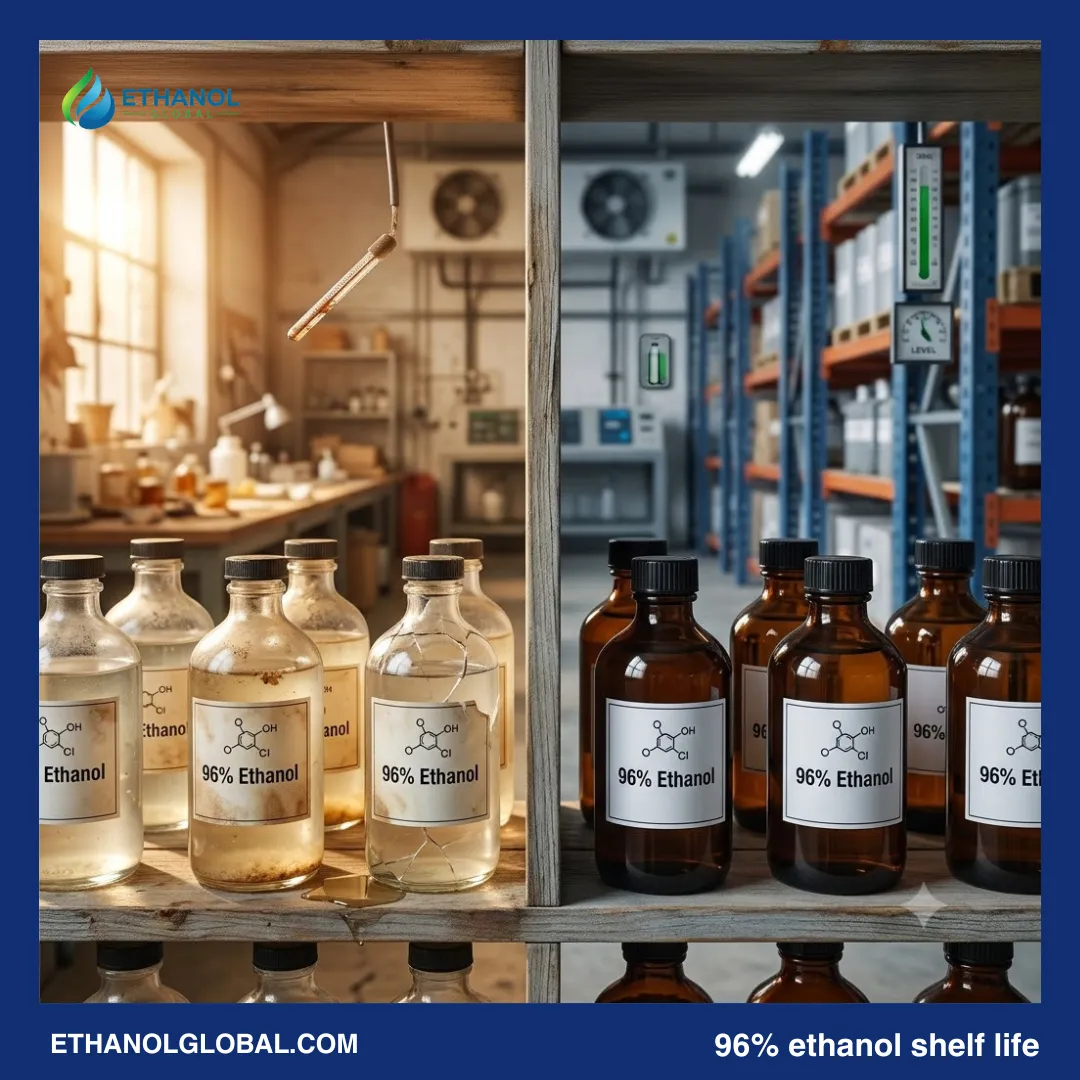
Industrial users depend on Ethanol 96% for various applications, including cleaning, extraction, manufacturing processes, and chemical production. Although ethanol is a stable chemical compound, improper storage conditions can reduce its quality and shorten its usable life.
Understanding how storage conditions affect Ethanol 96% shelf life helps businesses maintain product quality, minimize losses, and ensure consistent performance during industrial applications.
This article explains how temperature, humidity, light exposure, packaging materials, and storage practices influence the stability of Ethanol 96%.
What Determines the Shelf Life of Ethanol 96%?
Ethanol itself has excellent chemical stability; however, its shelf life depends largely on protection from environmental factors.
The main factors affecting Ethanol 96% shelf life include:
- Storage temperature
- Moisture exposure
- Air contact
- Light exposure
- Container quality
- Storage duration
- Handling practices
When stored under proper conditions, Ethanol 96% can maintain its quality for extended periods.
Temperature Has a Major Impact on Ethanol Stability
Temperature changes can influence ethanol evaporation rates and packaging performance.
Recommended Storage Temperature
For optimal stability, Ethanol 96% should generally be stored in a controlled environment between 15°C and 25°C.
Avoid storing ethanol in areas exposed to:
- Direct sunlight
- Excessive heat sources
- Extreme temperature changes
- Uncontrolled outdoor conditions
High temperatures increase evaporation and may gradually reduce product volume and concentration.
Moisture Exposure Can Reduce Ethanol Quality
Ethanol is a hygroscopic substance, meaning it can absorb moisture from the surrounding environment.
When Ethanol 96% is exposed to humid air:
- Water content may increase.
- Ethanol concentration can decrease.
- Product specifications may change.
- Industrial performance may be affected.
Keeping containers properly sealed is essential to maintain the original ethanol concentration and quality.
Air Exposure Increases Evaporation Risk
Frequent opening of ethanol containers allows ethanol vapor to escape and increases the chance of contamination.
Continuous air exposure may result in:
- Product loss
- Reduced concentration
- Increased moisture absorption
- Lower storage efficiency
Using airtight containers and limiting unnecessary opening helps preserve Ethanol 96% quality.
Light Exposure and Long-Term Storage
Although ethanol is relatively stable under normal conditions, prolonged exposure to sunlight and UV radiation may affect storage performance, especially when impurities or additives are present.
For better preservation:
- Store ethanol indoors.
- Avoid direct sunlight.
- Use appropriate storage areas.
- Select suitable packaging materials.
Choosing the Right Storage Container
The storage container plays an important role in maintaining Ethanol 96% quality.
Suitable container materials include:
- Stainless steel
- Aluminum
- High-density polyethylene (HDPE)
- Compatible industrial storage containers
Containers should prevent leakage, reduce vapor loss, and protect ethanol from external contamination.
Why Proper Sealing Is Important
A properly sealed container helps maintain ethanol concentration and prevents unwanted moisture absorption.
Storage containers should be regularly inspected for:
- Damaged caps
- Loose fittings
- Broken seals
- Cracks or leaks
Proper sealing improves product stability and extends the effective storage period of Ethanol 96%.
Warehouse Conditions Affect Ethanol Shelf Life
Storage facilities for Ethanol 96% should provide safe and controlled conditions.
Recommended warehouse practices include:
- Good ventilation
- Stable temperature conditions
- Low humidity levels
- Fire safety systems
- Proper chemical storage procedures
A well-managed storage environment helps maintain ethanol quality and reduces operational risks.
How Long Can Ethanol 96% Be Stored?
When stored correctly in sealed containers and under controlled conditions, Ethanol 96% can maintain its quality for several years.
The actual shelf life depends on:
- Packaging quality
- Storage environment
- Exposure to air and moisture
- Manufacturer recommendations
Opened containers generally require faster consumption because repeated exposure to air can gradually affect ethanol concentration.
Signs That Ethanol Quality Has Declined
Before using stored ethanol, inspect the product for possible quality changes.
Warning signs may include:
- Damaged containers
- Reduced liquid volume
- Visible contamination
- Unusual appearance
- Changes in laboratory test results
For critical industrial applications, testing ethanol concentration before use is recommended.
Best Practices to Maximize Ethanol 96% Shelf Life
To maintain ethanol quality during storage:
- Keep storage temperatures stable.
- Protect containers from humidity.
- Store ethanol away from direct sunlight.
- Use airtight packaging.
- Minimize container opening.
- Inspect storage conditions regularly.
- Follow FIFO (First-In, First-Out) inventory management.
These practices help industries reduce waste, maintain product performance, and maximize the value of their Ethanol 96% supply.
Conclusion
The Ethanol 96% shelf life is strongly influenced by storage conditions rather than the chemical stability of ethanol itself. Proper temperature control, moisture prevention, suitable packaging, and effective warehouse management are essential for maintaining ethanol quality over time.
For industries that depend on consistent ethanol performance, proper storage practices help reduce losses, improve efficiency, and ensure reliable production processes.
Ethanol Global is a trusted manufacturer and supplier of Ethanol 96%, providing high-quality industrial ethanol solutions with consistent specifications, reliable production capacity, and export-ready supply for customers worldwide.