


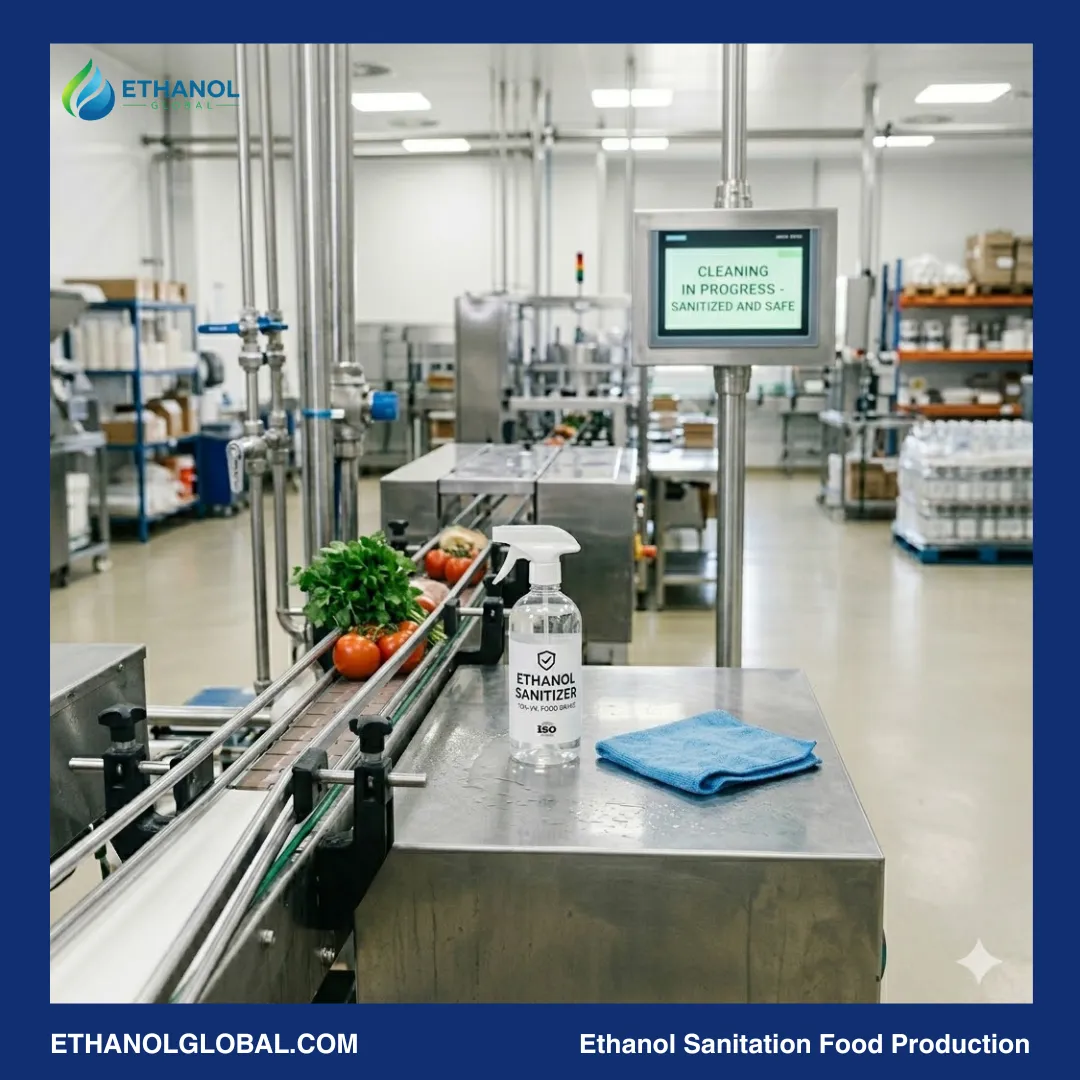
Food safety is one of the most critical priorities in modern manufacturing facilities. Effective sanitation procedures help prevent contamination, protect consumers, and ensure compliance with regulatory requirements. Among various disinfecting agents, ethanol sanitation food production practices have become increasingly popular due to ethanol’s effectiveness, rapid evaporation, and compatibility with many food-processing environments.
Why Sanitation Matters in Food Production Facilities
Food production facilities face constant challenges from bacteria, fungi, viruses, and other contaminants. Without proper sanitation protocols, microorganisms can spread through equipment, work surfaces, packaging lines, and storage areas.
Effective sanitation helps manufacturers:
- Maintain product quality
- Prevent foodborne illnesses
- Meet regulatory standards
- Reduce production downtime
- Protect brand reputation
This is why selecting the right sanitizing agent is essential for food manufacturers.
How Ethanol Works as a Sanitizing Agent
Ethanol is an alcohol-based disinfectant that destroys microorganisms by disrupting their cellular structures and denaturing proteins. When used at appropriate concentrations, ethanol can effectively eliminate many common pathogens found in food processing environments.
Key advantages of ethanol include:
- Fast antimicrobial action
- Quick drying without residue
- Easy application on various surfaces
- Reduced risk of product contamination
- Compatibility with food-contact equipment when used correctly
These benefits make ethanol sanitation food production systems highly effective for maintaining hygienic conditions.
Common Applications of Ethanol in Food Processing Plants
Food manufacturers use ethanol for sanitizing numerous areas throughout production facilities.
Equipment Sanitization
Processing equipment such as conveyors, mixers, fillers, and packaging machinery require regular cleaning and disinfection. Ethanol can help reduce microbial contamination on critical surfaces.
Food Contact Surfaces
Worktables, cutting stations, and preparation areas often require rapid sanitization between production batches. Ethanol’s fast evaporation minimizes downtime.
Packaging Areas
Packaging environments must remain clean to prevent contamination after food processing. Ethanol-based sanitizers are commonly used for surface disinfection in these zones.
Laboratory and Quality Control Areas
Testing laboratories within food facilities frequently use ethanol for sanitizing instruments and workspaces to maintain accurate analytical results.
Benefits of Ethanol Sanitation Food Production Programs
Rapid Drying Time
Unlike some disinfectants that leave moisture behind, ethanol evaporates quickly. This characteristic helps manufacturers resume operations faster after cleaning procedures.
Minimal Residue
Residue can create quality concerns or attract contaminants. Ethanol leaves little to no residue when applied properly.
Broad-Spectrum Effectiveness
Ethanol demonstrates effectiveness against a wide range of bacteria and microorganisms commonly encountered in food production environments.
Operational Efficiency
The quick action of ethanol supports streamlined sanitation processes and minimizes interruptions to production schedules.
Regulatory Considerations
Food manufacturers must ensure that sanitation programs comply with local and international food safety regulations. Food manufacturers must ensure that sanitation programs comply with local and international food safety regulations. For detailed guidance on food safety requirements and sanitation practices, manufacturers can refer to the FDA Food Safety Resources.Ethanol used in food production facilities should meet quality specifications and be handled according to established safety guidelines.
When implementing ethanol-based sanitation systems, companies should consider:
- Required concentration levels
- Application procedures
- Worker safety measures
- Storage requirements
- Documentation and compliance protocols
Best Practices for Using Ethanol in Food Production Facilities
To maximize sanitation effectiveness, manufacturers should follow several best practices:
- Clean surfaces thoroughly before sanitization.
- Use the appropriate ethanol concentration.
- Follow recommended contact times.
- Train employees on proper handling procedures.
- Store ethanol in designated safety-approved areas.
- Conduct regular sanitation verification and monitoring.
These practices help ensure consistent hygiene performance throughout the facility.
Challenges and Safety Considerations
Although ethanol offers significant sanitation advantages, it is also a flammable substance. Facilities must implement proper ventilation, storage systems, and fire safety procedures.
Additional considerations include:
- Employee training programs
- Personal protective equipment (PPE)
- Spill response procedures
- Safe transportation and storage practices
Proper management helps organizations safely benefit from ethanol-based sanitation systems.
The Future of Ethanol Sanitation in Food Manufacturing
As food safety standards continue to evolve, manufacturers are seeking sanitation solutions that combine effectiveness, efficiency, and regulatory compliance. Ethanol remains a valuable option due to its proven antimicrobial properties and operational advantages.
Growing emphasis on hygiene, consumer safety, and contamination prevention is expected to support continued adoption of ethanol sanitation food production practices across the global food industry.
Conclusion
Ethanol sanitation food production programs play a crucial role in maintaining hygiene standards within food manufacturing facilities. Its rapid antimicrobial action, quick evaporation, and versatility make ethanol an effective sanitizing solution for equipment, surfaces, and processing environments. When combined with proper safety procedures and regulatory compliance, ethanol can significantly enhance food safety and operational efficiency throughout the production process