


Why there is no single “standard” ethanol treat rate
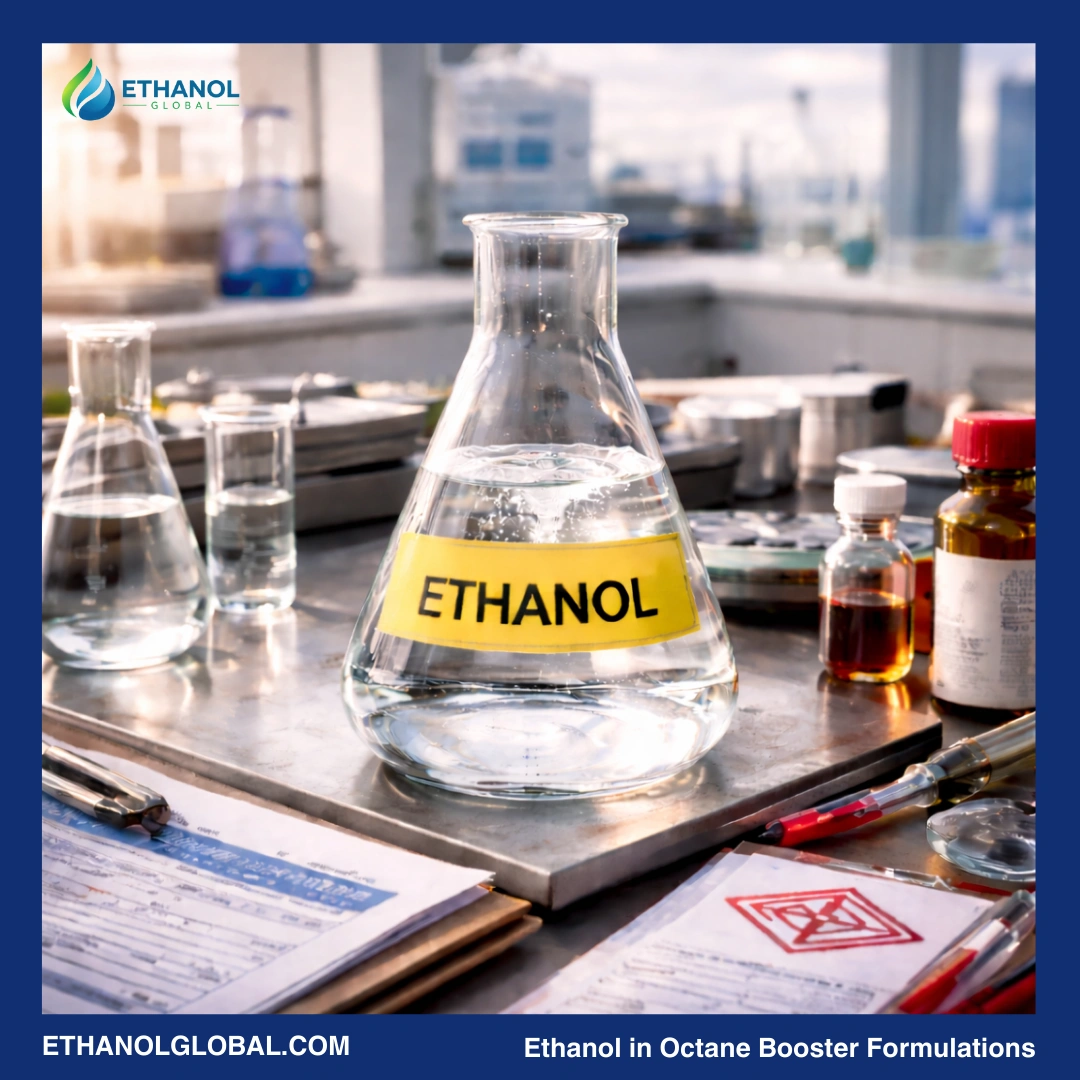
“How much ethanol in octane booster” depends on the target octane, base gasoline quality, local fuel standards, and seasonal volatility rules. Some markets cap ethanol content; others mandate oxygen content; and some applications use ethanol primarily for octane improvement while staying within regulatory limits.
Even within the same country, the “right” treat rate can change from batch to batch because blending is ultimately a balancing exercise across multiple specifications, not just octane. Blenders may adjust ethanol dosage to stay inside limits for volatility (RVP), distillation behavior, and materials compatibility—while still achieving the required performance. That is why professional buyers and technical teams focus on the spec window and the final fuel compliance (what the gasoline must meet at delivery), rather than asking for a single universal percentage. In practice, the correct approach is to confirm the destination’s regulations first, then determine an allowable ethanol range, and finally fine-tune the treat rate based on base gasoline quality and seasonal requirements.
Typical ethanol blending ranges in gasoline markets
In many fuel programs, ethanol is commonly used in single-digit to low-double-digit volume ranges, depending on local regulations and the final fuel grade. These ranges are determined by:
– the allowed ethanol percentage
– required oxygen content
– vapor pressure / volatility limits
– distribution infrastructure compatibility
Because regulations vary, buyers should treat “typical ranges” as a market guideline—not a universal rule.
How octane targets affect ethanol usage
Higher octane targets may require:
– improved base blendstock selection, and/or
– additional octane components
Ethanol can help increase octane, but it may not be the only variable. A well-designed blend strategy looks at octane, volatility, distillation curve, and compatibility together.
Practical buyer checklist
-Confirm your market’s allowable ethanol content and seasonal requirements
– Specify the end-use clearly (fuel blending vs industrial solvent)
– Align on packaging to reduce moisture risk (ISO tank often preferred for bulk)
– Require batch COA and consistent documentation
Ethanol Global support
Ethanol Global can support your quotation with clear documentation, packaging options, and export coordination—so your procurement team and blending team stay aligned from contract to delivery.