
Introduction
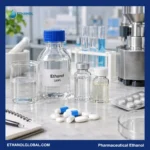
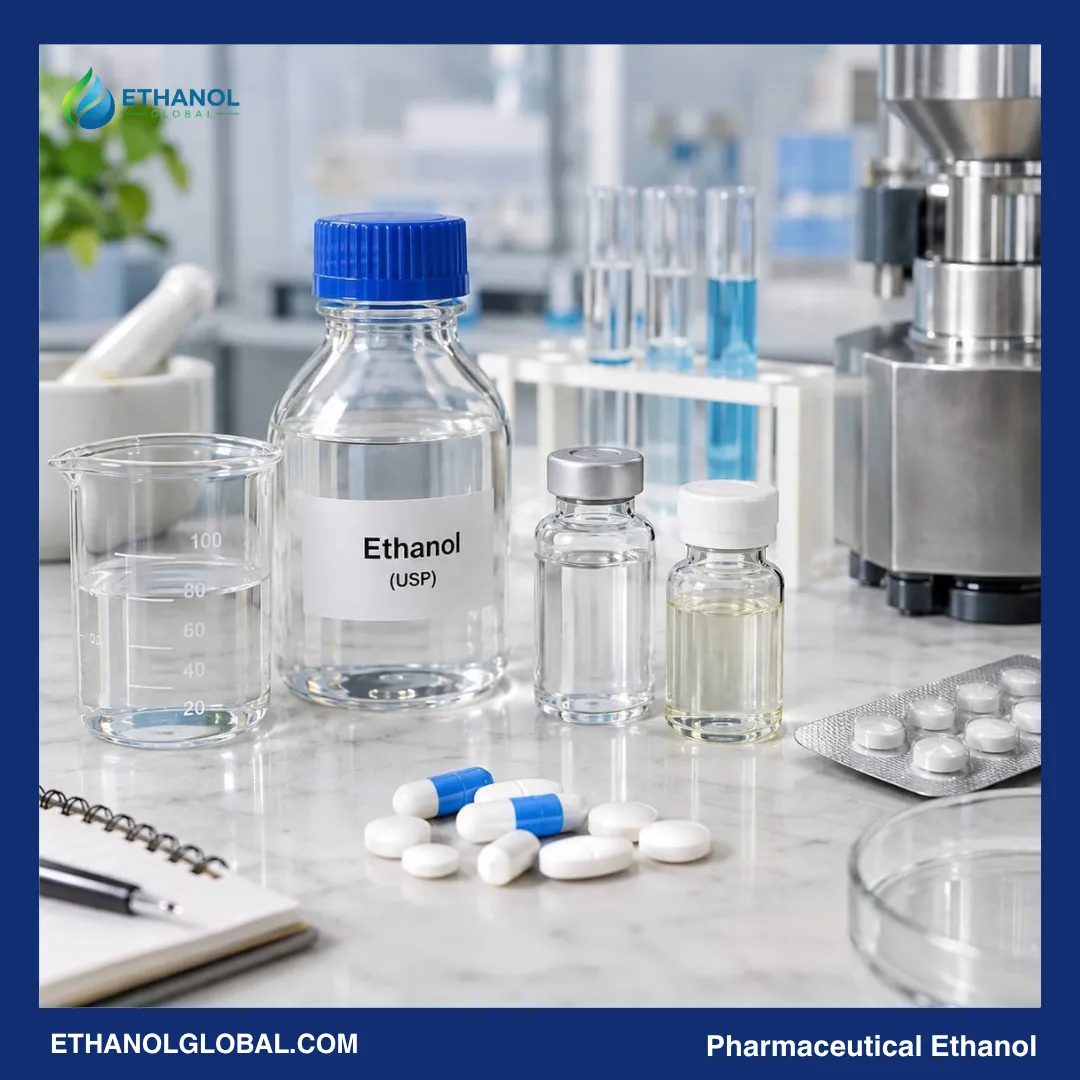
Pharmaceutical ethanol plays an important role in modern drug formulation. Manufacturers use ethanol as a solvent, co-solvent, and functional ingredient in various pharmaceutical products. Its ability to dissolve certain active pharmaceutical ingredients (APIs) makes it valuable in liquid medicines, topical preparations, and selected manufacturing processes.
However, choosing the right ethanol grade requires more than checking its concentration. Formulators must consider ingredient compatibility, product stability, patient safety, and manufacturing requirements. Therefore, understanding these factors helps pharmaceutical manufacturers develop consistent and reliable products. For a broader overview of ethanol’s role in healthcare, explore our guide to pharmaceutical and medical applications of ethanol.
1. Why Is Ethanol Used in Pharmaceutical Formulation?
Ethanol offers several useful properties for pharmaceutical manufacturing. It mixes with water, dissolves many organic compounds, and evaporates relatively easily under suitable processing conditions.
These characteristics support several applications:
- Solvent for active ingredients: Ethanol can dissolve APIs that have limited solubility in water.
- Co-solvent in liquid medicines: Combining ethanol with water or other suitable solvents can improve the solubility of selected ingredients.
- Topical formulations: Ethanol may support ingredient dissolution and influence drying time in certain skin preparations.
- Manufacturing processes: It can serve as a processing solvent in selected granulation, extraction, and coating operations.
- Preservative support: Its antimicrobial properties may contribute to preservation in specific formulations, depending on concentration and the complete product composition.
Nevertheless, ethanol does not suit every formulation. Its concentration and intended function must be evaluated for each product.
2. Selecting the Right Ethanol Grade
Selecting pharmaceutical ethanol begins with the intended application. Different products require different purity specifications, concentrations, and impurity limits.
Manufacturers should evaluate the following factors:
- Purity: Confirm that the ethanol meets the applicable pharmaceutical specifications.
- Concentration: Choose a suitable ethanol-to-water ratio based on API solubility and formulation performance.
- Impurity profile: Assess potential contaminants, including methanol, against applicable quality and safety requirements.
- Regulatory compliance: Verify that the material complies with the relevant pharmacopoeial standards and market regulations.
- Batch consistency: Review the certificate of analysis (CoA) and supplier quality documentation.
Importantly, industrial-grade ethanol should not automatically be considered suitable for pharmaceutical use. Pharmaceutical applications require appropriate quality controls, traceability, and verification of the material’s intended use.
The US Food and Drug Administration provides specific guidance on testing ethanol and isopropyl alcohol for methanol contamination. Manufacturers should review these requirements when sourcing pharmaceutical alcohol.
3. Compatibility with Active Ingredients and Excipients
Compatibility is a critical consideration when using pharmaceutical ethanol. Although ethanol can improve the solubility of some compounds, it may also affect the behavior of other formulation ingredients.
API Solubility and Stability
An API may dissolve readily in ethanol but precipitate when the solvent composition changes. For example, adding water to an ethanolic solution can reduce the solubility of certain compounds.
Formulators should therefore evaluate solubility across the intended ethanol concentration range. They should also investigate whether ethanol exposure affects the API’s chemical stability during manufacturing and storage.
Excipient Compatibility
Excipients perform essential functions, including thickening, stabilizing, controlling drug release, and improving product appearance. Ethanol may change the solubility or physical properties of these materials.
For example, some polymers may lose viscosity or precipitate at elevated ethanol concentrations. In modified-release products, solvent interactions may also affect drug-release performance.
Consequently, compatibility studies should assess the complete formulation rather than testing the active ingredient alone.
Packaging Compatibility
Ethanol can interact with certain plastics, elastomers, and container components. These interactions may affect material integrity or introduce extractable and leachable substances into the product.
Manufacturers should evaluate the proposed container-closure system under appropriate storage conditions. This assessment is particularly important for liquid formulations containing substantial ethanol concentrations.
4. Processing Considerations in Pharmaceutical Manufacturing
A suitable formulation must also remain manageable during production. Ethanol’s physical properties influence several manufacturing parameters.
For additional guidance on residual solvent requirements in pharmaceutical manufacturing, refer to the USP general chapter on residual solvents, which discusses solvent selection and safety-based limits.
Mixing and Dissolution
Mixing speed, temperature, addition order, and solvent concentration can influence dissolution and uniformity. Manufacturers should establish controlled procedures that minimize precipitation and maintain consistent product quality.
Evaporation and Solvent Removal
Ethanol is volatile and flammable. Open handling can cause solvent loss, change formulation concentration, and create fire hazards.
Where evaporation or solvent recovery is part of the process, manufacturers should control temperature, ventilation, equipment suitability, and solvent-loss measurements. Closed systems may help reduce emissions and improve process consistency.
Residual Solvent Control
When ethanol is used as a processing solvent, manufacturers should determine whether the process requires solvent removal and establish appropriate acceptance criteria. Analytical testing should verify that the finished product meets its specifications.
The applicable regulatory framework depends on the solvent’s intended role and the dosage form. Manufacturers should distinguish ethanol deliberately retained as a formulation ingredient from ethanol remaining after a manufacturing step.
5. Quality Control and Regulatory Compliance
Quality assurance is essential when sourcing and processing pharmaceutical ethanol. A reliable control strategy should cover raw materials, manufacturing conditions, and finished-product testing.
Key quality checks include:
- Identity and ethanol concentration.
- Methanol and other relevant impurity testing.
- Compliance with applicable pharmaceutical specifications.
- Microbiological quality where required by the product.
- Finished-product stability and compatibility.
- Appropriate storage, handling, and batch documentation.
Regulatory requirements vary by jurisdiction and product type. Manufacturers should consult the applicable pharmacopoeia and relevant regulatory guidance rather than relying on a single universal specification.
6. Safety and Storage Requirements
Ethanol is a flammable liquid, so safe storage and handling are essential throughout pharmaceutical manufacturing.
Facilities should use suitable storage containers, control ignition sources, provide appropriate ventilation, and follow applicable fire-safety requirements. Workers should also receive training in spill response and personal protective equipment.
In addition, pharmaceutical ethanol should be stored under conditions that preserve its quality and prevent contamination. Containers should remain properly closed when not in use, and material identification and batch traceability should be maintained.
These controls help protect personnel while supporting consistent manufacturing operations.
Conclusion
Pharmaceutical ethanol is a versatile solvent that can improve ingredient solubility and support several drug-manufacturing processes. However, successful application depends on selecting the correct grade, evaluating API and excipient compatibility, controlling evaporation, and meeting relevant quality standards.
By integrating these considerations into formulation development and process validation, manufacturers can improve product consistency, maintain safety, and reduce manufacturing risks. Careful supplier qualification and analytical verification are equally important for ensuring that pharmaceutical ethanol meets the requirements of its intended application.
Looking for reliable ethanol solutions for pharmaceutical and industrial applications? Ethanol Global is your trusted partner for ethanol supply and export, delivering quality-focused solutions to meet your business needs. Contact us today to discuss your requirements.