


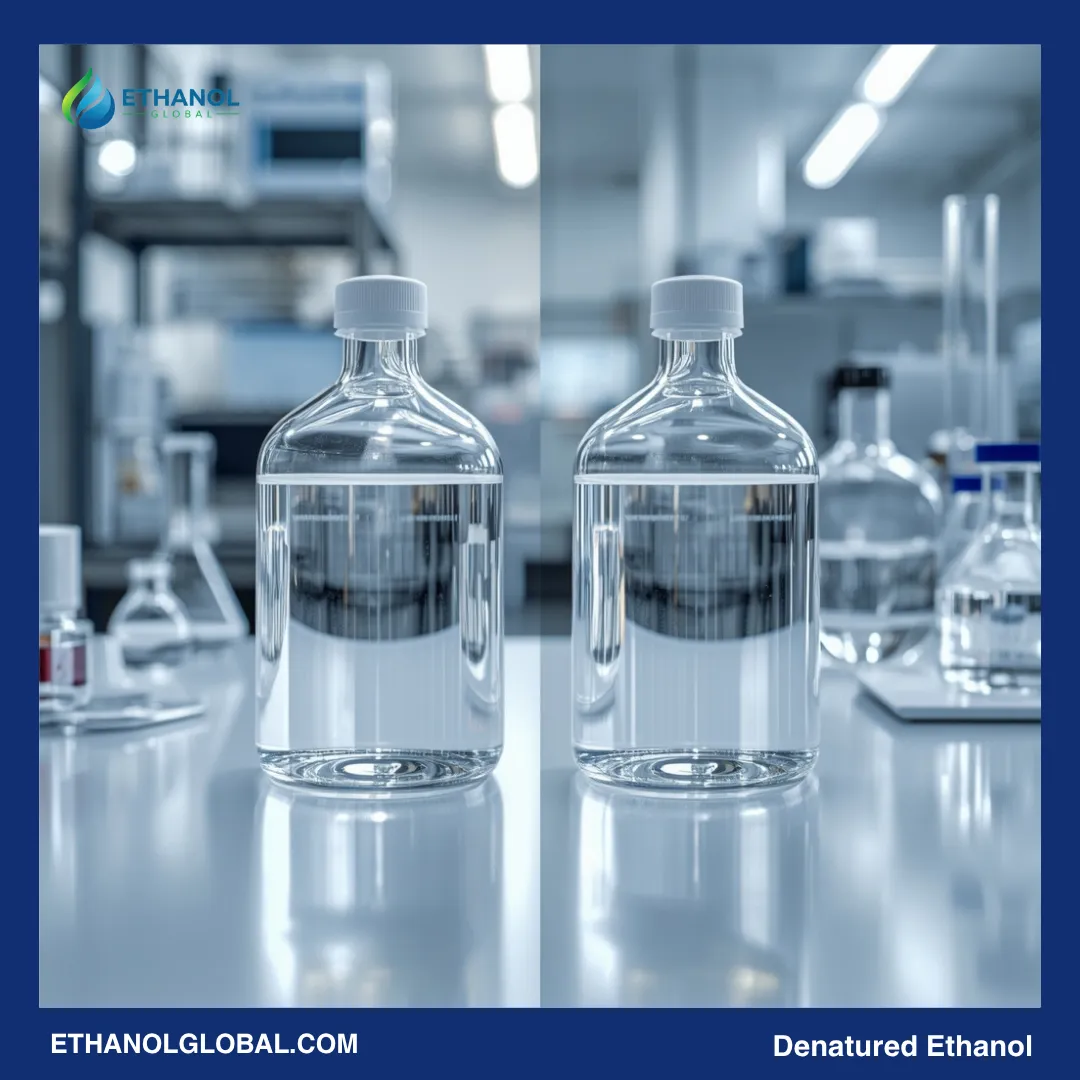
Denatured ethanol is widely used in industrial manufacturing, cleaning, cosmetics, and chemical processing. However, undenatured ethanol remains essential for applications that require ethanol without added denaturing agents. Understanding the differences between these two types of alcohol helps manufacturers, distributors, and industrial buyers select the right product for their specific needs.
Although both products contain ethyl alcohol, their composition, permitted applications, handling requirements, and regulatory treatment can differ significantly.
What Is Denatured Ethanol?
Denatured ethanol is ethyl alcohol mixed with specific substances called denaturants. These additives make the alcohol unsuitable for consumption as a beverage. Depending on the intended application and applicable regulations, denaturants may include substances that create an unpleasant taste or smell or otherwise make the product unsuitable for drinking.
Manufacturers use denatured ethanol in many non-beverage applications because it can provide effective solvent performance while meeting applicable industrial and regulatory requirements.
Common applications include:
- Industrial cleaning and degreasing
- Paints, coatings, and printing inks
- Personal care and cosmetic formulations
- Household and institutional cleaning products
- Chemical manufacturing and solvent-based formulations
The exact composition of denatured ethanol varies according to its formulation, intended use, and the regulations of the destination market. Buyers should always review the product specification and Safety Data Sheet (SDS) before purchasing.
What Is Undenatured Ethanol?
Undenatured ethanol is ethyl alcohol that has not been treated with denaturing agents. It may be supplied at different concentrations, depending on the production method, grade, and intended application.
Because it does not contain added denaturants, undenatured ethanol is suitable for certain applications where the presence of these additives would be unacceptable. However, its suitability depends on purity, concentration, quality standards, and regulatory approval.
Typical applications include:
- Pharmaceutical manufacturing
- Food processing and flavor extraction, where permitted
- Fragrance and perfume production
- Laboratory research and analytical procedures
- Specialized chemical formulations
Undenatured ethanol is not automatically suitable for every pharmaceutical, food, or cosmetic application. Manufacturers must verify that the product meets the required specifications and applicable safety standards.
Manufacturers use denatured ethanol in many non-beverage applications while complying with applicable [denatured alcohol regulations].
Denatured Ethanol vs. Undenatured Ethanol: Key Differences
The main difference between denatured and undenatured ethanol is the presence or absence of denaturing agents. This distinction influences product selection, formulation compatibility, and regulatory requirements.
| Feature | Denatured Ethanol | Undenatured Ethanol |
|---|---|---|
| Composition | Ethanol with added denaturants | Ethanol without added denaturants |
| Intended use | Primarily non-beverage applications | Applications requiring ethanol without denaturants |
| Industrial cleaning | Commonly used | Used when the formulation requires it |
| Cosmetics | Suitable for compatible formulations | Suitable for formulations requiring undenatured alcohol |
| Food applications | Generally unsuitable unless specifically permitted under applicable rules | May be suitable when food-grade requirements are met |
| Pharmaceutical applications | Depends on the formulation and regulations | Often selected when denaturants are unacceptable |
| Regulatory requirements | Depend on the denaturing formula and intended use | Depend on alcohol classification, intended use, and local laws |
Importantly, denatured ethanol is not necessarily less pure in terms of its original ethanol content. The defining difference is the addition of denaturants, not simply the ethanol concentration.
Industrial Applications of Denatured Ethanol
Denatured ethanol serves as a versatile solvent across multiple industries. Its ability to dissolve many organic substances and evaporate relatively quickly makes it useful in a variety of manufacturing processes.
1. Cleaning and Degreasing
Manufacturers use denatured ethanol to remove certain oils, residues, and contaminants from compatible surfaces. It can be incorporated into industrial cleaning solutions, maintenance products, and selected electronic or precision-cleaning formulations.
However, compatibility testing is essential because denaturants may affect sensitive materials or leave residues.
2. Paints, Coatings, and Inks
In paints, coatings, and printing inks, denatured ethanol can act as a solvent or formulation component. It helps dissolve compatible ingredients and can influence drying behavior.
The appropriate grade depends on the formulation, evaporation requirements, and the chemical properties of the other ingredients.
3. Cosmetics and Personal Care
Denatured ethanol is used in selected cosmetic products, including perfumes, deodorants, and other topical formulations. It may help dissolve fragrance ingredients and support product application.
Cosmetic manufacturers must ensure that the denaturants used are permitted for the intended product and target market.
4. Chemical Manufacturing
In chemical processing, denatured ethanol can serve as a solvent, processing aid, or formulation ingredient. Its suitability depends on the chemical reaction, product specifications, and the potential effect of denaturants on the final product.
Applications of Undenatured Ethanol
Undenatured ethanol is important when additional denaturing substances could interfere with product quality or violate application-specific requirements.
1. Pharmaceutical Production
Pharmaceutical manufacturers may use undenatured ethanol in approved formulations and manufacturing processes. The required grade, ethanol concentration, and impurity limits depend on the product and relevant pharmacopoeial standards.
Using undenatured ethanol does not, by itself, establish that the material is pharmaceutical grade.
2. Food and Flavor Processing
Undenatured ethanol may be used in permitted food-related applications, including the extraction of selected flavor compounds. Suppliers must meet the relevant food-grade specifications and legal requirements.
Manufacturers should verify the product’s origin, purity, documentation, and suitability for the specific food-processing operation.
3. Perfume and Fragrance Manufacturing
Fragrance producers may select undenatured ethanol when their formulations require alcohol without added denaturants. Product choice depends on fragrance compatibility, odor profile, purity, and applicable market requirements.
4. Laboratory and Analytical Work
Laboratories may require undenatured ethanol for specific analytical procedures, sample preparation, or research applications. The appropriate grade depends on the test method and acceptable impurity levels.
How to Choose Between Denatured and Undenatured Ethanol
Selecting the correct ethanol type requires more than comparing prices or alcohol concentrations. Industrial buyers should evaluate the intended use and technical requirements before placing an order.
For a more detailed comparison of commercial uses and tax considerations, read our guide to [Denatured vs. Undenatured Ethanol 96%].
Consider the following factors:
- Application requirements: Determine whether the manufacturing process permits denaturants or requires ethanol without them.
- Purity and concentration: Confirm the ethanol percentage and the limits for relevant impurities.
- Chemical compatibility: Check whether the denaturants could interfere with the final formulation or production process.
- Regulatory compliance: Review the applicable rules for the destination country and intended application.
- Documentation: Request the Certificate of Analysis (CoA), Safety Data Sheet (SDS), and relevant quality documentation.
- Supply and packaging: Evaluate packaging options, storage conditions, transportation requirements, and supplier reliability.
For industrial cleaning, coatings, and many non-beverage formulations, denatured ethanol may be appropriate. Conversely, applications that prohibit denaturants may require undenatured ethanol that meets the relevant grade and quality specifications.
Safety and Storage Considerations
Both denatured and undenatured ethanol are flammable liquids. Their vapors can ignite in the presence of heat, sparks, or open flames. Appropriate ventilation, compatible storage containers, and suitable fire-safety measures are therefore essential.
Denatured ethanol also requires careful handling because the added substances can introduce additional hazards. The risks depend on the specific denaturants and their concentrations.
Before handling either product, workers should review the Safety Data Sheet, use appropriate personal protective equipment, and follow workplace safety procedures. Ethanol intended for industrial use should never be assumed safe for consumption, and denatured ethanol must not be consumed.
Conclusion
Denatured ethanol and undenatured ethanol share the same principal alcohol component, but their different compositions make them suitable for different applications. Denatured ethanol is widely used in industrial cleaning, coatings, cosmetics, and chemical manufacturing, while undenatured ethanol is often preferred when denaturing agents are unacceptable.
For manufacturers and industrial buyers, the best choice depends on the intended application, required purity, chemical compatibility, regulatory compliance, and total procurement cost. Reviewing technical specifications and safety documentation before purchase helps ensure reliable performance and appropriate product selection.
Looking for a reliable ethanol supplier? Ethanol Global is a trusted producer and exporter of ethanol, offering quality products, competitive pricing, and reliable international shipping solutions tailored to your industrial requirements. Contact our team today to discuss your ethanol specifications and request a quotation.