





Introduction
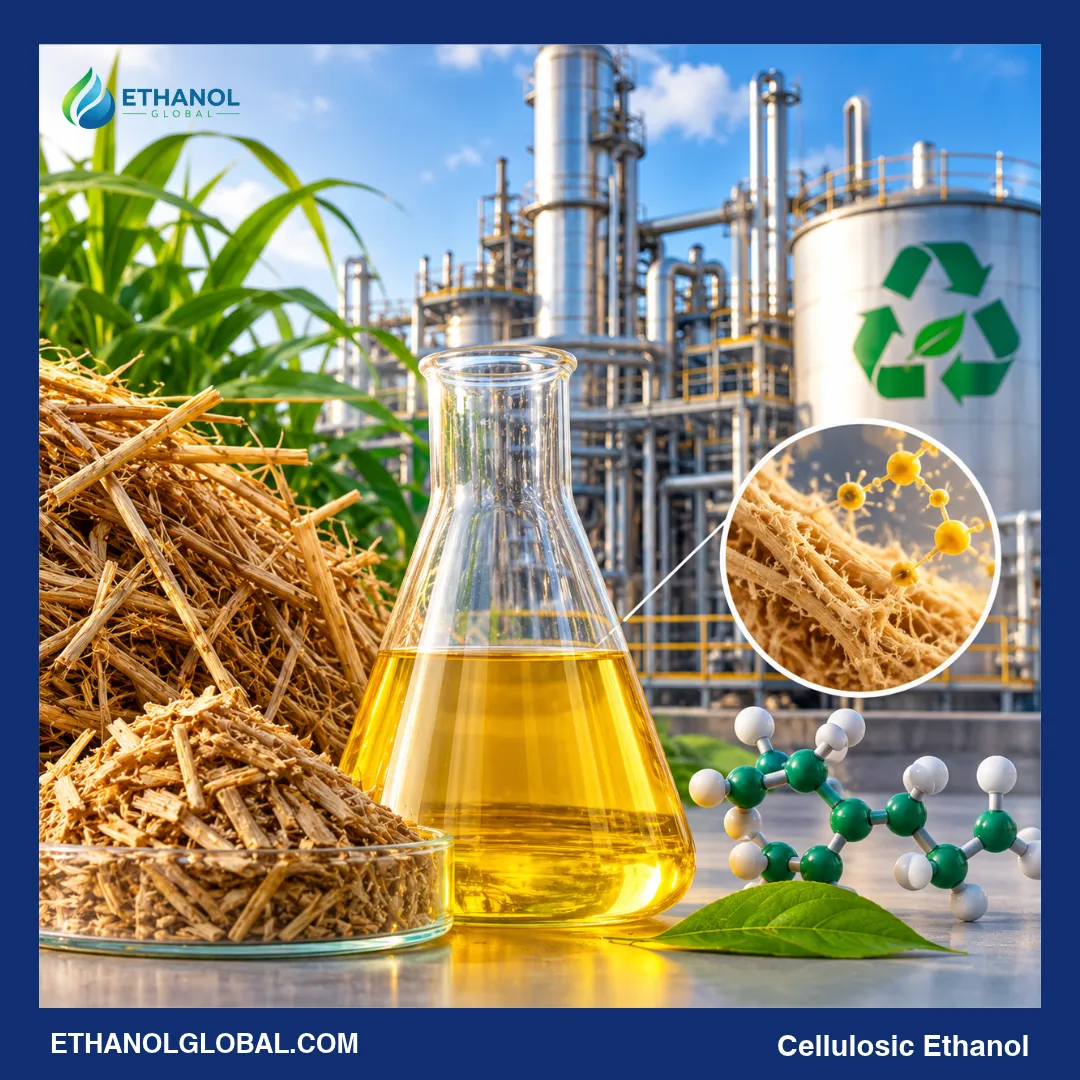
Cellulosic ethanol is an advanced biofuel produced from non-food plant materials, including agricultural residues, forestry waste, and dedicated energy crops. Unlike conventional first-generation ethanol, which relies mainly on sugar- and starch-based feedstocks, this technology uses lignocellulosic biomass as its primary raw material.
The growing demand for renewable fuels has increased interest in second-generation bioethanol. In particular, cellulosic ethanol offers an opportunity to convert agricultural and industrial waste into valuable energy products. However, its commercial development still faces several technical and economic challenges.
Understanding biomass pretreatment, conversion efficiency, and industrial scale-up requirements is essential for improving production performance and reducing operating costs.
1. What Is Second-Generation Cellulosic Ethanol?
Second-generation ethanol is produced from lignocellulosic biomass rather than food crops. Common feedstocks include:
- Wheat straw and rice straw
- Corn stover and sugarcane bagasse
- Wood chips and forestry residues
- Agricultural processing waste
- Energy crops such as switchgrass
These materials contain three major structural components: cellulose, hemicellulose, and lignin.
Cellulose and hemicellulose contain carbohydrate structures that can be converted into fermentable sugars. Lignin, on the other hand, provides structural strength to plant cell walls and makes the conversion process more difficult.
The main objective of cellulosic ethanol production is to break down these complex structures, release fermentable sugars, and convert them into ethanol through microbial fermentation.
For additional information about biomass conversion technologies and renewable fuel production, explore the [U.S. Department of Energy guide to biofuels and transportation energy].
2. Biomass Pretreatment Technologies
Biomass pretreatment is one of the most important stages in cellulosic ethanol production. Its purpose is to improve enzyme accessibility by disrupting the physical and chemical structure of lignocellulosic materials.
Without effective pretreatment, enzymes cannot efficiently access cellulose, resulting in lower sugar yields and higher production costs.
Several pretreatment technologies are currently used or investigated.
2.1. Dilute Acid Pretreatment
Dilute acid pretreatment uses low concentrations of acids, commonly sulfuric acid, at elevated temperatures to break down hemicellulose.
This process releases soluble sugars and improves access to cellulose for subsequent enzymatic hydrolysis.
However, excessive treatment severity can produce fermentation inhibitors, including furfural and hydroxymethylfurfural (HMF). Therefore, temperature, acid concentration, and residence time must be carefully controlled.
2.2. Alkaline Pretreatment
Alkaline pretreatment uses chemicals such as sodium hydroxide to modify lignin structures and improve biomass digestibility.
This method can increase cellulose accessibility and reduce the physical barriers that limit enzymatic conversion.
However, chemical recovery, wastewater treatment, and reagent consumption can increase operating expenses.
2.3. Steam Explosion
Steam explosion exposes biomass to high-pressure steam, followed by rapid pressure release.
This treatment disrupts plant cell walls and increases the accessible surface area of cellulose.
Steam explosion can reduce chemical consumption, although its effectiveness depends on feedstock composition and operating conditions. Some configurations also require additional conditioning to reduce fermentation inhibitors.
2.4. Organosolv Pretreatment
Organosolv pretreatment uses organic solvents, often combined with water and catalysts, to separate lignin from cellulose and hemicellulose.
One advantage is the possibility of recovering relatively pure lignin as a valuable by-product.
Nevertheless, solvent recovery, equipment requirements, and process safety must be considered when evaluating commercial applications.
3. Enzymatic Hydrolysis and Sugar Conversion
After pretreatment, the biomass undergoes enzymatic hydrolysis. During this stage, specialized enzymes break down cellulose into glucose and hemicellulose into other fermentable sugars, including xylose.
Cellulases are particularly important because they convert cellulose into glucose, which can subsequently enter the fermentation process.
The efficiency of enzymatic hydrolysis depends on several factors:
- Enzyme loading and activity
- Biomass composition
- Pretreatment effectiveness
- Temperature and pH
- Solid concentration
- Presence of inhibitory compounds
Higher enzyme loading may improve sugar release, but it also increases production costs. Consequently, manufacturers aim to optimize enzyme performance while reducing the amount required per unit of biomass.
4. Fermentation of Cellulosic Sugars
Fermentation converts released sugars into ethanol using microorganisms such as yeast and specialized bacteria.
Glucose fermentation is relatively well established. However, efficient fermentation of pentose sugars, particularly xylose, remains an important challenge.
For a better understanding of industrial ethanol manufacturing, including feedstock preparation, fermentation, distillation, and purification, explore our detailed guide to the [ethanol production process].
Several process configurations are available:
Separate Hydrolysis and Fermentation (SHF): Enzymatic hydrolysis and fermentation occur in separate vessels under different operating conditions.
Simultaneous Saccharification and Fermentation (SSF): Enzymatic hydrolysis and fermentation take place in the same vessel. This approach can reduce glucose accumulation and limit certain forms of enzyme inhibition.
Consolidated Bioprocessing (CBP): This approach aims to combine enzyme production, biomass hydrolysis, and fermentation in a single biological system. Although promising, it still requires further development for many industrial applications.
Selecting the appropriate fermentation strategy depends on feedstock characteristics, microorganism performance, and overall process economics.
5. Conversion Efficiency and Production Performance
Conversion efficiency is a key indicator of cellulosic ethanol production performance. It describes how effectively the carbohydrates available in biomass are converted into ethanol.
Several factors influence the final ethanol yield:
- Cellulose and hemicellulose content of the feedstock
- Sugar recovery during pretreatment
- Enzymatic hydrolysis efficiency
- Microbial fermentation performance
- Formation of unwanted by-products
- Ethanol recovery and purification losses
Improving conversion efficiency requires optimization across the entire production chain rather than focusing on a single processing stage.
For example, a pretreatment method that releases more sugars may not necessarily improve overall ethanol production if it also generates high concentrations of fermentation inhibitors.
Therefore, industrial producers must evaluate the complete process, including sugar recovery, fermentation yield, enzyme consumption, and energy requirements.
6. Major Scale-Up Barriers in Industrial Production
Despite technological progress, commercial-scale cellulosic ethanol production faces several barriers.
6.1. High Feedstock Collection and Transportation Costs
Lignocellulosic biomass is often distributed across large agricultural and forestry areas. Its low bulk density can make transportation expensive.
Seasonal availability and variable moisture content also create challenges for continuous industrial operation.
Establishing production facilities close to biomass sources can reduce transportation expenses and improve supply chain reliability.
6.2. High Pretreatment and Enzyme Costs
Pretreatment systems require specialized equipment capable of operating under demanding temperature and pressure conditions.
In addition, enzyme production and consumption can represent a significant portion of operating expenses.
Improving enzyme efficiency, optimizing chemical recovery, and developing more effective pretreatment technologies are important strategies for reducing these costs.
6.3. Fermentation Inhibitors
Some pretreatment methods generate compounds that interfere with microbial activity.
Furfural, HMF, organic acids, and certain phenolic compounds can reduce fermentation performance.
Detoxification methods and inhibitor-tolerant microorganisms can help address this issue. However, additional treatment stages may increase water, energy, and chemical consumption.
6.4. Process Integration and Equipment Reliability
Industrial facilities must coordinate several interconnected operations, including biomass handling, pretreatment, hydrolysis, fermentation, distillation, and wastewater treatment.
Variations in feedstock quality can affect the performance of multiple processing stages.
Therefore, effective process integration, automation, and continuous monitoring are essential for maintaining stable production.
6.5. Capital Investment and Economic Uncertainty
Commercial cellulosic ethanol facilities require substantial initial investment.
Equipment costs, feedstock supply contracts, energy prices, enzyme expenses, and ethanol market conditions all influence project profitability.
Investors must evaluate both production costs and potential revenue from valuable by-products, including lignin and recovered process materials.
7. Strategies for Improving Commercial Viability
Several technological and operational strategies can improve the economic performance of second-generation ethanol plants.
First, selecting suitable biomass feedstocks can reduce pretreatment requirements and improve carbohydrate recovery.
Second, advanced enzyme formulations can increase hydrolysis efficiency while reducing enzyme consumption.
Third, improved fermentation microorganisms can utilize a wider range of sugars and tolerate inhibitory compounds.
Finally, integrating heat recovery, water recycling, and energy-efficient separation technologies can reduce utility consumption.
The development of biorefineries also creates opportunities to produce additional valuable products alongside ethanol. This approach can diversify revenue streams and improve the economic sustainability of industrial facilities.
8. Future Outlook for Cellulosic Ethanol
The future of cellulosic ethanol depends on continued improvements in process efficiency, feedstock logistics, and industrial economics.
Growing interest in low-carbon transportation fuels may create additional opportunities for advanced biofuels, particularly in sectors where direct electrification remains challenging.
Technological developments in biomass fractionation, enzyme engineering, microbial fermentation, and process integration are expected to support more efficient production systems.
However, commercial expansion will require reliable feedstock supplies, competitive production costs, and stable market conditions.
As these challenges are addressed, second-generation ethanol could become an increasingly important component of the renewable fuel industry.
Conclusion
Cellulosic ethanol provides a promising route for converting agricultural and forestry residues into renewable fuel. Its production involves several interconnected stages, including biomass pretreatment, enzymatic hydrolysis, sugar fermentation, and ethanol purification.
Although improvements in these technologies have increased production potential, high pretreatment costs, enzyme requirements, feedstock logistics, and industrial scale-up barriers continue to affect commercial competitiveness.
Further advances in process integration, fermentation technology, and resource recovery will be essential for making second-generation ethanol production more efficient and economically sustainable.
Contact Us for Ethanol Supply and Export
Are you looking for a reliable ethanol supplier for your industrial or commercial requirements? Ethanol Global is a producer, supplier, and exporter of ethanol, offering solutions for different industrial applications and international markets.
Contact our team today to request a price quotation, discuss your requirements, or receive further product information.