
Introduction
Ethanol 96% is an important chemical feedstock with potential applications in clean energy production. One promising application is ethanol-to-hydrogen conversion, a process that produces hydrogen for fuel cells and industrial energy systems. As demand for cleaner energy increases, researchers are exploring ethanol as a practical hydrogen carrier.
Ethanol offers several advantages, including relatively easy storage, transportation, and availability. However, converting ethanol into hydrogen requires suitable catalysts, controlled operating conditions, and efficient reaction systems.
Ethanol also plays an important role in various industrial energy applications, as explained in our guide to [Industrial Applications of Ethanol 96%].
How Does Ethanol-to-Hydrogen Conversion Work?
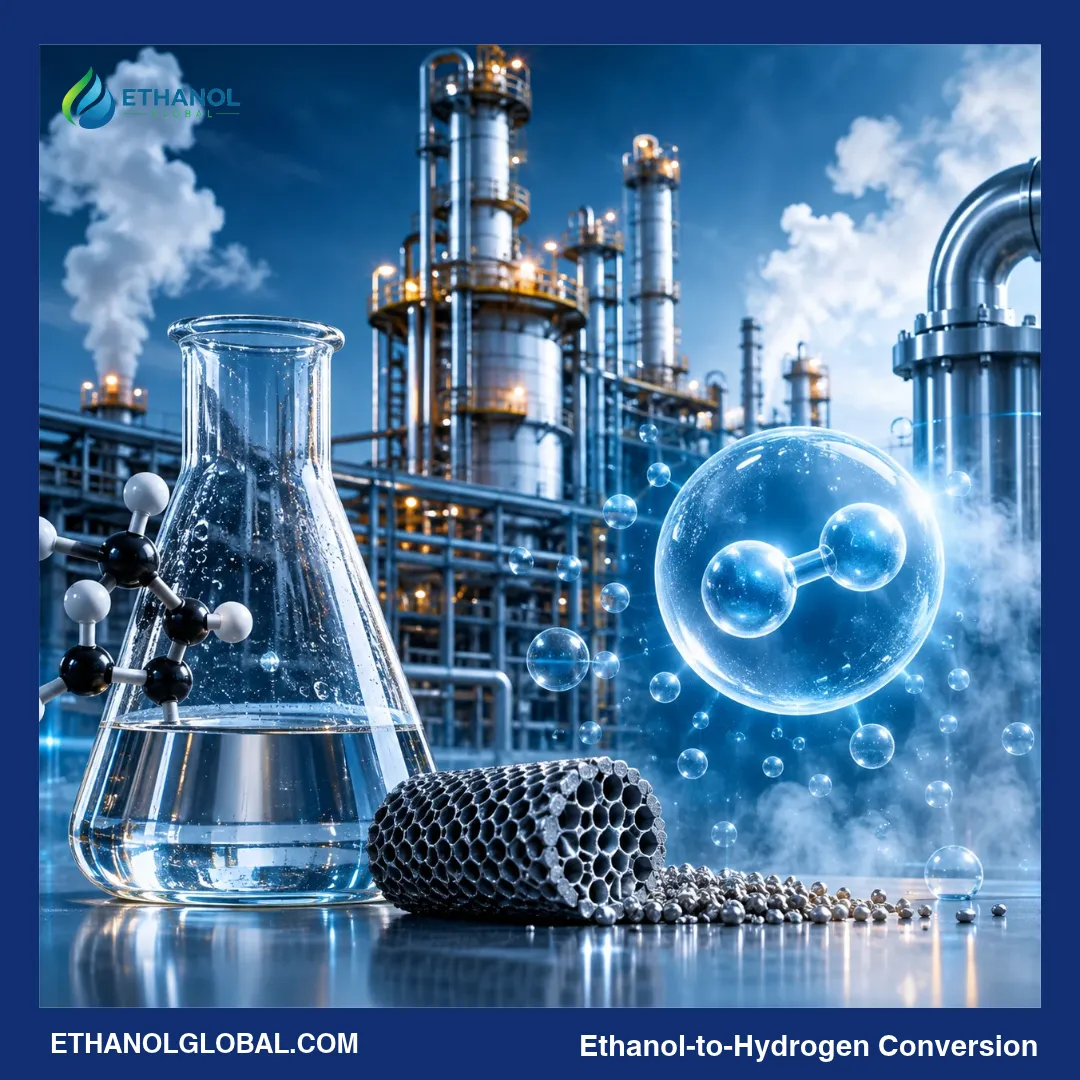
Ethanol-to-hydrogen conversion mainly involves steam reforming. In this process, ethanol reacts with water vapor at elevated temperatures to produce hydrogen, carbon monoxide, and carbon dioxide.
The overall steam reforming reaction can be represented as:
C₂H₅OH + 3H₂O → 2CO₂ + 6H₂
This reaction shows the theoretical potential to produce six moles of hydrogen from one mole of ethanol. However, actual hydrogen production depends on reaction conditions, catalyst performance, and unwanted side reactions.
Before entering the reforming system, ethanol 96% may require feed preparation to control its water content and ensure stable operation.
Catalysts Used in Ethanol Reforming
Catalysts play a major role in improving hydrogen production and reducing unwanted by-products. Several catalyst systems are commonly investigated.
Recent research has also explored advanced catalyst designs and process intensification strategies to improve hydrogen production from ethanol steam reforming. For further details, see this review of [recent advances in ethanol steam reforming catalysts].
1. Nickel-Based Catalysts
Nickel catalysts are widely studied because of their relatively low cost and good activity in ethanol steam reforming. They can support hydrogen production at high temperatures. However, carbon deposition may reduce catalyst activity over time.
2. Cobalt-Based Catalysts
Cobalt-based catalysts can promote ethanol conversion and influence product distribution. Their performance depends on catalyst composition, preparation methods, and operating temperature.
3. Rhodium and Other Noble Metal Catalysts
Rhodium, platinum, and other noble metals can provide high catalytic activity and help control reaction pathways. However, their high cost can limit large-scale industrial applications.
Selecting the right catalyst requires balancing hydrogen yield, operating stability, production costs, and resistance to deactivation.
Hydrogen Yield and Factors Affecting Production
Hydrogen yield is one of the most important performance indicators in ethanol reforming. Although theoretical calculations suggest a maximum of six moles of hydrogen per mole of ethanol under complete steam reforming, practical systems may produce less.
Several factors influence hydrogen production:
- Reaction Temperature: Higher temperatures can improve ethanol conversion and promote hydrogen formation, although excessive temperatures may increase energy requirements.
- Steam-to-Ethanol Ratio: Additional steam can help reduce carbon formation and support hydrogen production.
- Catalyst Composition: Different metals and catalyst supports influence conversion efficiency and product selectivity.
- Operating Pressure: Pressure affects reaction equilibrium and can change hydrogen production performance.
- Feedstock Quality: Consistent ethanol concentration and controlled impurities help maintain stable reactor operation.
Careful adjustment of these parameters is essential for improving process efficiency.
Main Process Limitations
Despite its potential, ethanol-to-hydrogen conversion faces several technical and economic challenges.
Carbon Deposition: Carbon formation on catalyst surfaces can block active sites and reduce hydrogen production. This issue is particularly important in nickel-based catalytic systems.
Energy Consumption: Steam reforming requires elevated temperatures, which increases energy demand. Efficient heat recovery is therefore important for reducing operating costs.
Catalyst Deactivation: High temperatures, sintering, and carbon accumulation can gradually reduce catalyst performance. Regular catalyst regeneration or replacement may be necessary.
By-Product Formation: Carbon monoxide, methane, and other compounds may form during the reaction. Additional purification steps are often required to obtain hydrogen suitable for sensitive applications such as fuel cells.
Economic Feasibility: Reactor design, catalyst costs, energy consumption, and hydrogen purification all influence the overall cost of production.
Industrial Applications and Future Opportunities
Hydrogen produced from ethanol can support several energy-related applications. These include fuel cell systems, distributed hydrogen generation, and industrial processes that require hydrogen as a clean energy carrier or chemical feedstock.
Ethanol-based hydrogen production may be particularly attractive in locations where ethanol is readily available and hydrogen transportation infrastructure is limited.
Future improvements in catalyst design, reactor efficiency, and heat integration could make this technology more competitive. However, its environmental benefits depend on ethanol sourcing, process energy, and overall carbon emissions.
Conclusion
Ethanol 96%-to-hydrogen conversion offers an interesting pathway for producing hydrogen from a liquid chemical feedstock. Steam reforming, supported by nickel, cobalt, or noble metal catalysts, provides the foundation for this technology.
However, catalyst deactivation, carbon deposition, energy consumption, and hydrogen purification remain important limitations. Improving these areas will be essential for making ethanol-based hydrogen production more efficient and commercially viable.
Looking for a Reliable Ethanol 96% Supplier?
Ethanol Global is a producer and exporter of Ethanol 96%, offering reliable supply solutions for industrial and commercial applications. Contact our team to request product specifications, a Certificate of Analysis (COA), or a competitive price quotation.